
AI
Thita vs LeetCode's Mock Interview: What's the Difference?
LeetCode's mock interview mode is a timed problem set. Thita is a voice-led AI interviewer that runs your code in 6 languages. Compare features and price.
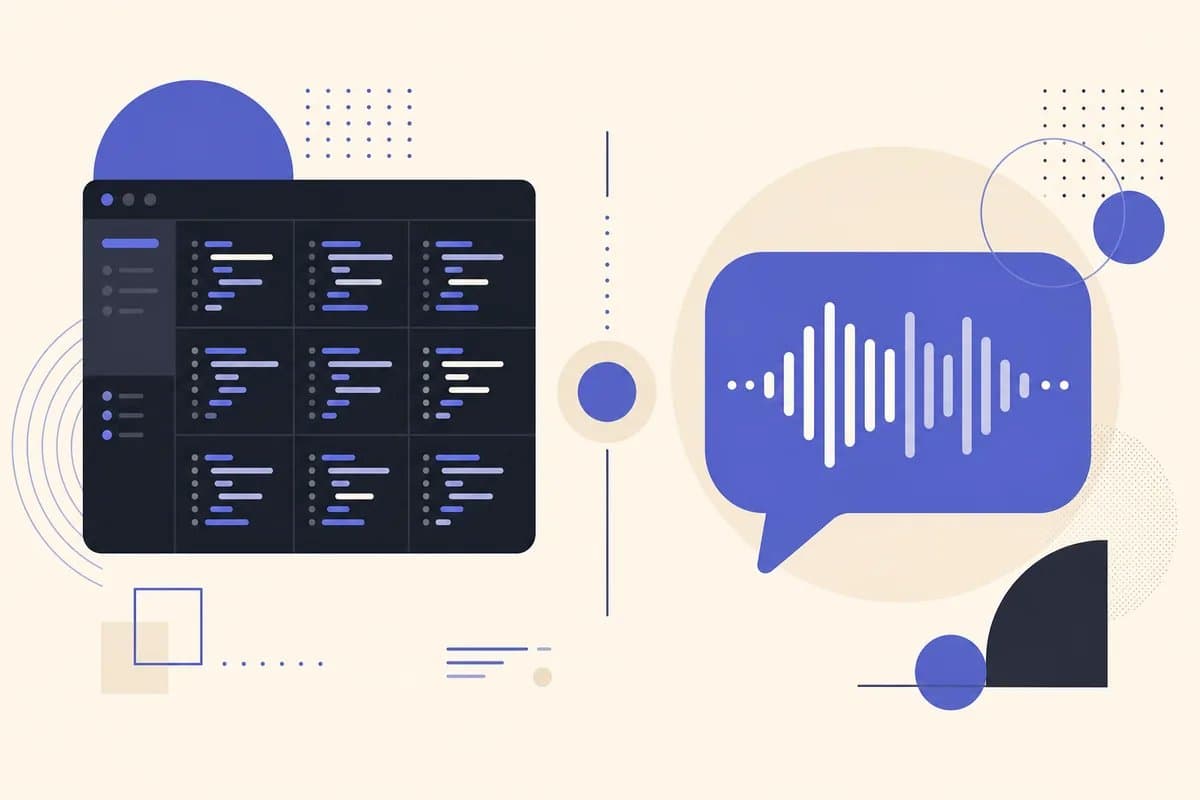
LeetCode is where most engineers build their coding foundations, and its problem bank is genuinely excellent. But LeetCode Premium also ships something called a "mock interview" mode, and candidates searching for leetcode mock interview or is leetcode mock interview enough are usually trying to work out whether that feature is a real substitute for interview practice, or just a timed problem set with a new name.
This post compares the two directly: what LeetCode's mock interview mode actually does, what Thita's AI interviewer does differently, and which one you should reach for depending on where you are in your prep.
We checked both platforms' public pages on 2026-09-07. Every claim about LeetCode below is sourced and linked; nothing here is guessed.
What LeetCode's mock interview mode actually is
LeetCode Premium's mock interview feature pulls a randomised set of problems by difficulty, starts a countdown timer, and summarises your performance once the timer ends. According to a 2026 review of the feature, it "doesn't hide the problem name, doesn't limit submission attempts, and doesn't penalize failed runs, whereas real interviews are stricter on all three dimensions." The same review calls it "a reasonable warm-up mechanism, not a simulation of a live technical interview." (Source: codeswiftr.com, "LeetCode Premium Review 2026", checked 2026-09-07. LeetCode's own pricing pages return a 403 to automated fetches, so pricing below is confirmed via this third-party review rather than the primary page.)
In plain terms: it is a timer bolted onto the same problem-solving experience you already have on the free tier. There is no interviewer, no voice, no one asking why you chose an approach, and no follow-up question when your first solution passes.
That is a legitimate and useful thing to have. It is not the same category of product as an interview.
What Thita's AI interviewer does differently
Thita's AI interviewer is a voice-led session: you talk through your approach out loud, write and run code in a real editor, and the AI asks adaptive follow-up questions based on what you actually said and submitted — not a script. It runs your code in six languages (Python, C++, Java, JavaScript, Go and C#) and covers rounds LeetCode doesn't touch at all: system design (on a canvas the AI evaluates), low-level design, machine coding, behavioural, product management, and data science/AI, plus interviews generated from your own resume.
Start a session at thita.ai/ai-interview — no partner or scheduling required.
Side-by-side comparison
| Dimension | LeetCode Mock Interview Mode | Thita AI Mock Interview |
|---|---|---|
| Format | Solo, timed, randomised problem set | Voice-led AI interviewer, adaptive follow-ups |
| Live voice / interviewer | No | Yes |
| Code execution | Yes, LeetCode's own judge | Yes, 6 languages |
| Follow-up questions | No | Yes, based on your actual answer |
| Round types | DSA only | DSA, System Design, LLD, Machine Coding, Behavioural, PM, Data Science/AI, resume-based |
| Feedback | Pass/fail plus a timer | Instant written report: correctness, complexity, code quality, communication |
| Free tier | Yes, problems are free; mock mode needs Premium | Yes, free Starter plan forever |
| Price | Premium subscription, roughly USD 35/month or USD 159/year | Free Starter; Pro roughly USD 15/month; Elite roughly USD 30/month (see current pricing) |
Sources, checked 2026-09-07: LeetCode Premium pricing and mock-interview-mode description from codeswiftr.com's 2026 review (leetcode.com blocks automated page fetches). Thita figures from productFacts.ts and lib/geo.ts, the site's single source of truth for product facts.
Where LeetCode genuinely wins
This isn't a one-sided comparison, and it shouldn't be.
- Problem depth and breadth. LeetCode has a much larger and more mature problem bank than any interview-prep platform, Thita included, and a huge, well-moderated discussion community under almost every problem.
- Pattern recognition at scale. If your gap is "I haven't solved enough problems to recognise a sliding-window question on sight," grinding LeetCode's free tier is still the fastest way to close it.
- Company-tagged lists. LeetCode's community-curated company lists ("Top 150 at Google", etc.) are a genuinely useful signal that took years of user submissions to build.
- Cost, if you only need problems. The free tier alone covers a large share of what most candidates need before they're ready for interview simulation at all.
Where Thita wins
- An actual interviewer. LeetCode's mock mode does not listen to your reasoning or ask a follow-up. Thita's does, out loud, in real time.
- Rounds beyond coding. LeetCode has no system design, behavioural, or resume-based interview simulation. Thita covers all of them.
- Recovery under pressure. The skill that separates a pass from a fail in a real interview is usually how you respond when a test case fails and someone is watching — not whether you eventually get to green. LeetCode's mock mode doesn't measure that at all.
- A free path to a real interview simulation. LeetCode's mock mode sits behind Premium. Thita's AI interviewer is available on the free Starter plan.
Who should pick which
Pick LeetCode if: your gap is still pattern recognition and raw repetition — you haven't solved enough DSA problems to feel comfortable with the common patterns, and you want the deepest, most community-vetted problem bank available. LeetCode's free tier is genuinely the right tool for that stage, and its Premium mock mode is a fine way to add light time pressure once you're already comfortable with the material.
Pick Thita if: you can already solve most medium-difficulty problems on your own and your real gap is the interview itself — explaining your approach out loud, handling a follow-up question you didn't expect, recovering when a test fails while someone is listening, or you need practice for a round LeetCode doesn't simulate at all, like system design or behavioural.
Use both, in sequence. Build fluency on LeetCode's free problem bank first. Once you can solve most of what you're targeting without hints, switch the bulk of your remaining prep time to live voice mock interviews, where the skill being tested changes from "can you solve it" to "can you perform while solving it."
A concrete example: the same problem, two settings
It helps to see the difference in practice rather than in the abstract.
On LeetCode's mock interview mode: you get a randomised medium-difficulty problem, say "find the shortest path in a grid with obstacles." The timer starts. You read it, recognise a BFS pattern, write the implementation, run it against the test cases, fix an off-by-one error in your queue logic, and submit once it passes. The timer stops. You get a pass/fail summary and a time-to-solve number. Nobody asked you why you chose BFS over Dijkstra. Nobody asked what happens if the grid is a million cells wide. Nobody noticed that you fixed the bug silently without explaining what caused it.
On Thita's AI interviewer: you get the same class of problem, but you're asked to explain your approach out loud before you start typing. You say you'll use BFS because you need the shortest path in an unweighted grid. The AI asks a follow-up: "What if some cells have different traversal costs?" You explain that you'd switch to Dijkstra's algorithm and why. You implement BFS, run it, and a test fails on an edge case with no valid path. You have to diagnose it out loud, fix it, and explain the fix. Once it passes, you get a written report scoring your explanation clarity, your handling of the follow-up, your debugging process, and your final code — not just whether the tests went green.
The underlying algorithm knowledge required is identical. What's different is whether the practice session tests the part of the interview that actually decides most outcomes: not "did you eventually get a working answer," but "how did you get there, and what did you do when something didn't work."
Common mistakes when treating a problem-solving platform as interview prep
Candidates who rely only on LeetCode's mock interview mode tend to make the same handful of mistakes, and it's worth naming them directly:
- Mistaking a passing test suite for interview readiness. A solution that passes every test case after twenty minutes of silent trial and error is not the same performance as one explained clearly, challenged with a follow-up, and defended under time pressure. Interviewers see the process, not just the output.
- Never practising explaining an approach before writing code. If the first time you say your plan out loud is in the actual interview, you'll stumble on phrasing you've never needed before, even if the algorithm itself is second nature.
- Skipping non-coding rounds entirely. A candidate who is strong on LeetCode but has never rehearsed a system design or behavioural round walks into those rounds with zero simulated repetitions, which is a much larger gap than any remaining DSA weakness.
- Assuming a timer is the same as pressure. A countdown clock and a person actively listening and reacting to your answer produce very different psychological states. Practising under one doesn't fully prepare you for the other.
- Treating every problem as isolated. Real interviews often layer constraints onto your first solution ("now the input doesn't fit in memory," "now writes need to be concurrent"). A platform that only grades your first submission never trains you to adapt mid-answer.
None of this makes LeetCode a bad tool — it makes it an incomplete one for anyone whose remaining gap is the interview itself rather than the algorithms.
Frequently asked questions
Is LeetCode's mock interview mode a real interview simulation?
Not really. It adds a timer and randomises the problem set, but there's no interviewer, no voice component, and no follow-up questions. Third-party reviews describe it as a warm-up mechanism rather than an interview simulation.
Can I use LeetCode and Thita together?
Yes, and that's the combination most candidates end up using: LeetCode's free problem bank for pattern practice, and Thita's AI interviewer for the parts LeetCode doesn't simulate — live voice, follow-ups, and non-coding rounds.
Does Thita replace LeetCode's problem bank?
No, and it isn't trying to. Thita has its own DSA patterns sheet with 410 problems across 16 pattern families, but LeetCode's bank is larger and has a longer track record. Use whichever problem source you prefer for solo practice, and use Thita for the interview simulation layer.
Does LeetCode's mock interview mode cover system design or behavioural rounds?
No. It is DSA-only. Thita covers system design, low-level design, machine coding, behavioural, product management, and data science/AI rounds, plus interviews generated from your resume.
What does Thita's AI interviewer cost?
There's a free Starter plan with limited access, and paid Pro and Elite tiers. Exact current pricing is on the pricing page rather than repeated here, since it can change.
Bottom line
LeetCode's mock interview mode is a timer, not an interviewer. It's a reasonable way to add light pressure to problems you already know how to solve, but it will not tell you whether you can explain your reasoning, handle a follow-up, or recover when something breaks while someone is watching. If that's the gap you're trying to close, start a live voice AI mock interview and keep LeetCode in your rotation for what it's genuinely good at: building the problem-solving base underneath the interview.