
Interview
Citrix Interview Questions and Process: The Complete Guide (2026)
Prepare for Citrix interview questions with a practical guide to likely rounds, coding expectations, a 30-day plan, and five mapped DSA questions to practise.
Citrix interview questions are best approached as a modern software engineering loop: expect an initial screen, coding evaluation, technical discussion that may include design, and a behavioural conversation about your work. Reported company-specific accounts are thin and vary by team, so confirm the exact format with your recruiter. Start with transferable fundamentals: solve coding problems clearly, explain complexity, test edge cases, and discuss your technical decisions with precision. Citrix's interview kit holds five mapped DSA questions to help you practise the coding patterns connected with the company.
The useful goal is not to memorise a supposedly fixed Citrix script. It is to become prepared for the parts of an engineering interview that remain consistent even when the sequence, interviewer mix, and team expectations change.
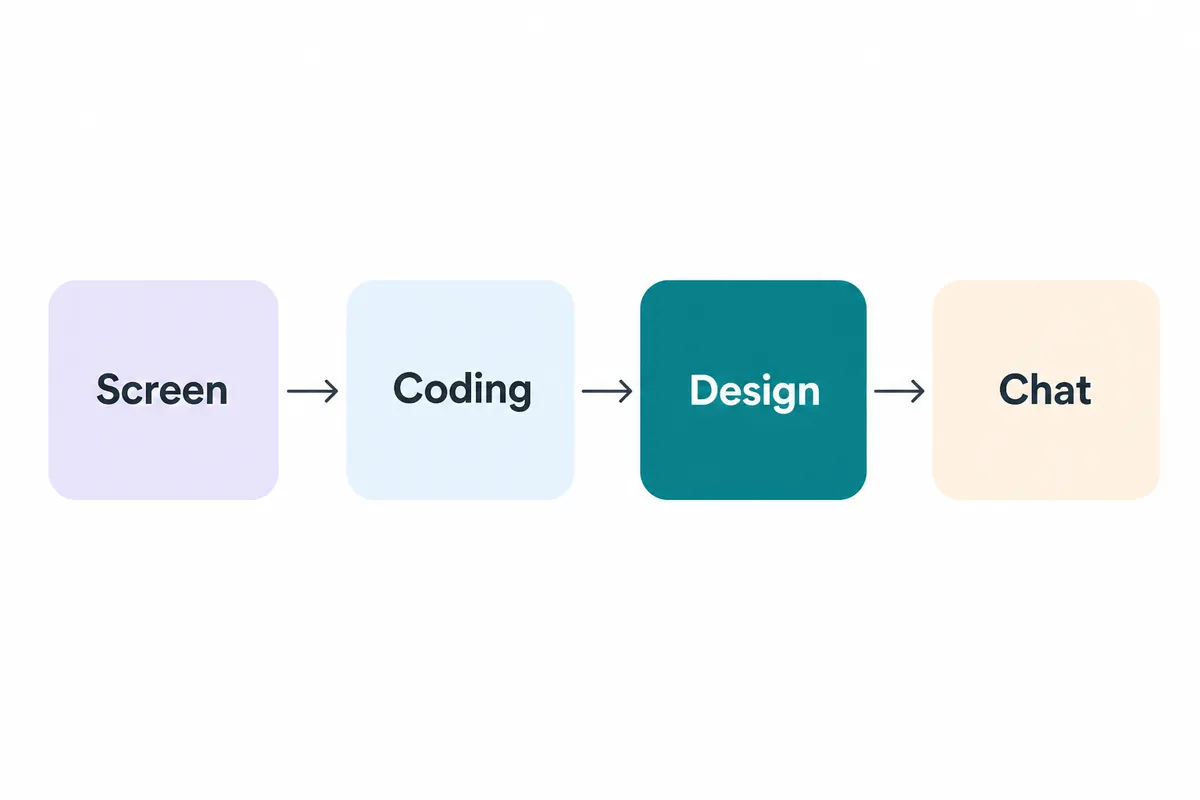
The Citrix interview process at a glance
There is no reliable, current company-specific public record that supports a fixed Citrix interview sequence, named ritual, platform, duration, or number of stages. Candidate experiences can differ substantially by product area, location, seniority, and hiring need.
The table below is therefore a preparation map, not a claim that every Citrix candidate will encounter every stage in this order.
| Possible stage | What to prepare | What it commonly screens for |
|---|---|---|
| Initial screen | Your experience, interests, and relevant projects | Communication, motivation, role fit |
| Coding screen | Data structures, algorithms, and clean implementation | Problem solving, complexity judgement |
| Technical discussion | Project depth, debugging, practical engineering choices | Technical ownership and reasoning |
| Design discussion | Components, interfaces, trade-offs, and scale where relevant | Structured thinking and system judgement |
| Behavioural conversation | Collaboration, conflict, delivery, and learning | Working style, ownership, and reflection |
Treat this as a checklist for the conversation you need with your recruiter. Ask which stages are planned, whether coding is live or asynchronous, what level of design is expected, and whether the team has any domain-specific focus. Those are sensible questions, not signs that you are underprepared.
Round one — the initial screen
An initial screen is often where a company establishes the basics: why you are interested in the role, whether your recent work aligns with the team, and whether there are practical constraints around location, notice period, or role level.
The technical bar may be light at this stage, but your project explanations still matter. Prepare a concise account of your most relevant work:
- the problem the team needed to solve;
- the specific part you owned;
- the technical decision you influenced;
- the measurable or observable outcome;
- what you would change with hindsight.
Avoid turning this into a résumé recital. A strong answer has a point of view. Instead of saying, “We improved a service,” explain the bottleneck, the options considered, why the team chose one, and what you learned when the implementation met real usage.
For candidates who have spent most of their preparation time on coding, this is often an easy place to gain ground. Practise speaking about technical work aloud, including the trade-offs you made rather than just the technologies you used.
Round two — coding questions
A coding screen, whether live or timed, usually assesses more than whether your final code passes. Interviewers commonly look for a method: can you turn an unclear prompt into a clear plan, choose an appropriate data structure, state time and space complexity, and validate the result against awkward inputs?
The highest-return preparation is pattern recognition. You should be able to identify when a question is likely about a hash map, two pointers, sliding window, tree traversal, graph search, binary search, or dynamic programming. The free DSA Patterns Sheet organises practice around those reusable shapes.
Use Citrix's interview kit as a focused starting point, then broaden out to adjacent patterns. The aim is not to assume that a mapped question will reappear word for word. It is to recognise the reasoning moves that transfer when the wording, constraints, or input format changes.
A reliable live-coding sequence looks like this:
- Restate the problem and clarify any ambiguity.
- Give a simple approach before jumping to the best one.
- Explain the data structure choice.
- State complexity before implementation.
- Write readable code in small sections.
- Walk through ordinary and edge-case inputs.
- Correct mistakes visibly rather than hoping they go unnoticed.
The difference between private thought and audible reasoning is important. In a live setting, an interviewer can only assess the reasoning they can hear. Read what interviewers actually look for in live coding rounds before your next mock session.
Preparation rule: do not wait until the end to test. Check assumptions as you go, especially around empty inputs, duplicates, boundary conditions, and integer limits.
Round three — technical and project discussion
Technical discussion often turns the spotlight from abstract puzzles to your engineering judgement. You may be asked to go deeper into a project listed on your résumé, describe an incident, explain a debugging process, or defend a design choice.
This round screens for credibility. Candidates sometimes speak in broad team language — “we built”, “we decided”, “we improved” — but cannot identify their own contribution when asked follow-up questions. That creates uncertainty about ownership.
Choose two projects and prepare them in depth. For each one, be ready to discuss:
- the original requirements and constraints;
- the architecture or codebase context;
- your personal responsibility;
- an important trade-off;
- a bug, failure, or disagreement;
- the eventual result;
- the lesson you carried into later work.
Good project answers do not pretend every decision was perfect. A thoughtful explanation of what failed, how you diagnosed it, and what you would do differently is usually stronger than a polished story with no tension.
If the discussion moves into core computer science, revise the foundations that support your day-to-day work. The free operating systems sheet, free DBMS sheet, and free computer networks sheet are useful for refreshing terminology and connecting theory to real engineering decisions.
Round four — design discussion
Design may appear as a dedicated conversation, as part of a project deep-dive, or not at all for some roles. Because Citrix-specific accounts do not establish a standardised design format, prepare for both levels of discussion without assuming one exact prompt.
Low-level design concerns objects, responsibilities, interfaces, state transitions, and extensibility. High-level design concerns services, data flow, reliability, scaling, storage, and operational trade-offs. The distinction matters because a candidate can be strong at one and still struggle with the other. See low-level design vs high-level design: what interviews actually expect for a practical comparison.
For a class-design prompt, start small:
- identify the core entities;
- define the main operations;
- keep responsibilities close to the data and behaviour they own;
- avoid abstractions until a variation genuinely needs one;
- explain how the next likely requirement would change the design.
For a system-level prompt, narrate your assumptions. Ask about expected traffic, latency requirements, consistency needs, failure tolerance, and likely growth. An answer that clearly scopes the problem is more useful than a diagram filled with fashionable infrastructure components.
The free Low Level Design Sheet and free System Design Sheet are useful references for practising these conversations. If a rate-limiting component comes up in your preparation, this rate limiter system design guide shows how to organise the trade-offs.
Round five — behavioural and hiring conversation
Behavioural conversations assess how you work when the answer is not in the code. Common themes include handling disagreement, managing changing requirements, responding to production issues, influencing without authority, mentoring, receiving feedback, and balancing speed with quality.
Use a simple story structure: situation, responsibility, action, outcome, reflection. Keep the emphasis on action. The interviewer is not only looking for a successful result; they are trying to understand your judgement while events were uncertain.
Prepare stories that show different dimensions of your experience:
- a difficult technical decision;
- a conflict or disagreement handled constructively;
- a failure or missed expectation;
- a time you improved a process;
- a time you helped another engineer succeed;
- a situation where you changed your mind after new evidence.
An AI mock interview can help you rehearse these answers under pressure. Record yourself if possible. You will quickly notice where an answer loses structure, uses vague team language, or skips the reflection that makes the story memorable.
Named Citrix rituals: what is actually known
No named Citrix interview ritual, distinctive platform, fixed exercise, or standardised company-wide stage could be reliably sourced for this guide. That is worth saying plainly because invented specificity is worse than useful uncertainty.
For Citrix, the company-specific preparation advantage is therefore not a secret format to memorise. It is preparation resilience. You need a plan that works if the technical screen is coding-heavy, if a hiring manager spends most of the time on your past systems, or if a team adds a design discussion relevant to its work.
Use your recruiter conversation strategically. Ask:
- Which skills will each interview focus on?
- Will I write executable code during the process?
- Is the role expecting class-level or system-level design?
- How much of the interview will cover prior projects?
- Are there topics the team recommends revising?
These questions help you allocate effort without asking the recruiter to reveal interview content. They also demonstrate that you think in terms of expectations, constraints, and preparation quality.
Is the Citrix interview hard?
It can be challenging, but there is not enough reliable public evidence to rank Citrix against a fixed difficulty scale or claim that one stage is universally decisive.
The hard part for most candidates is not an obscure trick question. It is sustaining clear technical reasoning across different formats: coding under observation, discussing complexity, explaining a project in depth, and making sensible trade-offs when a design prompt has incomplete requirements.
How many rounds are there? A reliable company-wide count is not available from current reported accounts. A modern software engineering process commonly includes a screen, technical evaluation, and interviews covering coding, technical depth, design, or behavioural fit, but you should confirm the actual sequence with your recruiter.
How long does the process take? There is no dependable Citrix-specific timeline to cite. Hiring speed can vary by team, location, candidate availability, and role urgency. Ask when decisions are expected after each stage, then use that information to plan your preparation cadence.
The best response to uncertainty is breadth with priorities. Keep coding as the daily habit, prepare project stories early, and add design practice according to the role level and recruiter guidance.
A 30-day Citrix interview preparation plan
Days one to seven — rebuild coding fluency
Start with core DSA patterns. Focus on recognising the problem shape before coding: arrays and strings, hash maps, two pointers, sliding windows, recursion, trees, graphs, and binary search.
Practise in a timed environment using in-browser code practice. After every problem, write down the key recognition cue: what in the prompt should have led you to that pattern sooner? This turns solved questions into reusable knowledge.
Days eight to fourteen — practise communication
Keep solving coding questions, but make verbal explanation part of every session. Before writing code, state the brute-force option, the improved approach, complexity, and test plan.
Work through the five mapped DSA questions in Citrix's interview kit, then revisit any approach you could solve but could not explain smoothly. A technically correct solution delivered without structure can still feel less convincing in an interview.
Read how to explain your thought process clearly in coding interviews and practise its principles out loud.
Days fifteen to twenty-one — add engineering depth
Prepare your project narratives and revise the fundamentals behind them. If you claim to have improved performance, be ready to explain the bottleneck and measurement. If you mention a database, know the indexing, consistency, or query trade-offs involved. If you mention services, know the failure modes and observability story.
Do at least one design exercise at both class and system level. Focus on assumptions and trade-offs rather than producing a memorised template.
Days twenty-two to thirty — simulate the real conversation
Run full mock sessions: coding with explanation, a project deep-dive, a design prompt, and behavioural stories. Review not just whether you reached the answer, but how you got there.
Use the final days to improve your weak point rather than cramming unfamiliar topics. If coding speed is the issue, practise timed patterns. If project answers are vague, write clearer ownership statements. If design feels scattered, practise stating assumptions before drawing components.
Frequently asked questions
What Citrix interview questions should I practise first?
Start with data structures and algorithms questions that test pattern recognition, complexity analysis, and clear implementation. Citrix's interview kit provides five mapped DSA questions as a focused starting point.
Does Citrix have a fixed interview process?
A fixed, reliable company-wide process could not be sourced for this guide. Reported accounts are thin and likely vary by team, level, and location. Confirm the format with your recruiter.
Does Citrix ask coding questions?
Coding preparation is sensible for a software engineering interview process. Focus on writing correct, readable code while explaining your reasoning and complexity choices.
Should I prepare system design for a Citrix interview?
Prepare design fundamentals if you are interviewing for an experienced role or if your recruiter indicates design will be assessed. Cover both class-level and system-level reasoning rather than assuming one specific format.
How should I prepare for a Citrix technical screen?
Practise common DSA patterns, narrate your approach before coding, test edge cases, and be ready to discuss the complexity of your solution. Timed practice is particularly useful.
What should I ask the Citrix recruiter?
Ask about the planned stages, coding format, expected design level, interview focus, and decision timeline. These questions help you prepare efficiently without relying on outdated reports.
How do I explain my past projects well?
Describe the context, your personal responsibility, the decision you made, the outcome, and what you learned. Be specific about your own contribution rather than relying only on “we”.
Is behavioural preparation important?
Yes. Behavioural discussion helps interviewers understand collaboration, ownership, learning, and judgement. Prepare concrete stories about success, failure, conflict, and technical decisions.
What if I do not know the exact interview format?
Use a balanced preparation plan: coding patterns, project depth, design basics, and behavioural stories. This gives you coverage across the most common engineering interview formats while you wait for recruiter confirmation.
Where to start
Citrix-specific public process detail is limited, but your preparation does not need to be. Build a dependable coding method, make your project stories concrete, and practise explaining decisions rather than only arriving at answers.
Open Citrix's interview kit to work through the five mapped DSA questions. Then use the free sheets to broaden your revision and an AI mock interview to rehearse coding, design, and behavioural conversations aloud.
Confirm the final interview structure with your recruiter, then adapt this plan to the role and team you are meeting.
Topics
Related on Thita
Your next step
Practise with AI mock interviews
A spoken interview that asks follow-up questions, runs your code and ends with a written report.