
Interview
Morgan Stanley Interview Questions and Process: The Complete Guide (2026)
A practical guide to Morgan Stanley interview questions, covering coding, design and behavioural preparation, a thirty-day plan and realistic next steps.
Morgan Stanley interview questions can test more than whether you can reach a correct answer. Prepare to explain your coding choices, reason about complexity, discuss how a design would change under new requirements, and describe your own project decisions with precision. Because interview structure varies by role, location and hiring team, use the recruiter’s agenda as the source of truth — then prepare the technical and communication skills that transfer across the loop.
For targeted technical practice, Morgan Stanley's interview kit holds three mapped DSA questions and three low-level design problems. Work through them as company-relevant practice, then broaden into the patterns and design habits behind them.
The process at a glance
The research available for this guide does not establish a fixed, company-wide Morgan Stanley interview sequence, round count or timing. That matters: presenting a neat universal script would be more reassuring than useful. Ask your recruiter which stages apply to your role, whether the interview is virtual or in person, and whether any exercise is timed.
Use this table as a preparation map for the interview agenda you receive.
| Agenda item to confirm | What to prepare | What it screens for |
|---|---|---|
| Coding exercise or live coding | Core DSA patterns, clean implementation, edge cases | Problem solving and complexity reasoning |
| Technical discussion | Clear explanations, trade-offs, debugging habits | Engineering judgement and communication |
| Low-level design discussion | Objects, responsibilities, interfaces and changeability | Code structure and extensibility |
| Project deep-dive | Decisions, constraints, incidents and outcomes | Ownership and technical depth |
| Behavioural conversation | Collaboration, conflict, judgement and motivation | Working style and role fit |
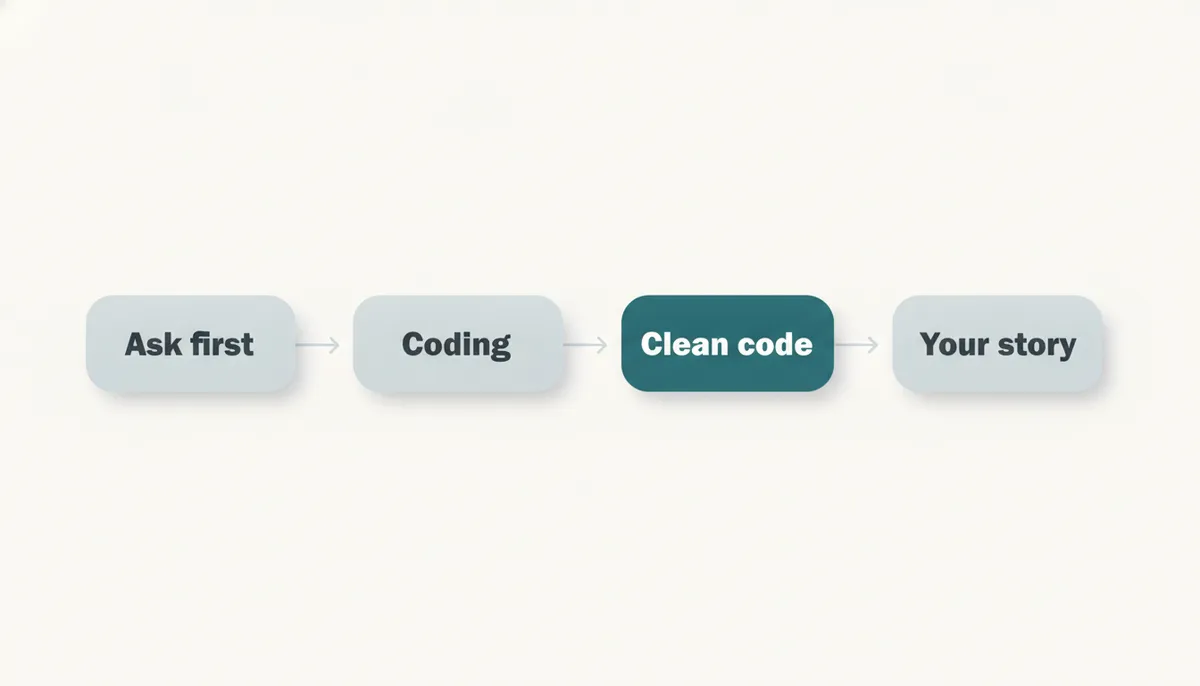
The important distinction is between a list of topics and an interview-ready performance. You may know hash maps, classes and API boundaries already. The interviewer still needs to see how you arrive at an answer, how you react when assumptions change, and whether you can make a useful decision without pretending that every trade-off has a perfect answer.
Round one — coding assessment or live coding
If your Morgan Stanley process includes a coding exercise, treat it as a test of disciplined reasoning rather than a race to produce clever code. Start by restating the problem in your own words. Clarify inputs, outputs and constraints. Give a simple approach before jumping to the optimised one, then explain why the better approach improves time or space use.
This is where candidates often create avoidable problems. They recognise a familiar pattern, start writing immediately and only later discover that they assumed the wrong boundary condition. A short pause to define examples and constraints is usually faster than a rewrite.
Focus your preparation on recognising common shapes: lookup-heavy problems, ordered-search problems, traversal problems, intervals, recursion and stateful dynamic programming. The DSA Patterns Sheet is free to browse and organises practice around those reusable patterns. If pattern selection is the part that feels inconsistent, read how to identify the right DSA pattern in a coding interview.
What this stage screens for is not merely whether you have encountered a problem before. It screens for whether you can turn an ambiguous prompt into a sequence of sensible decisions:
- identify the data structure that matches the access pattern;
- state complexity before implementation;
- write code another engineer can follow;
- test ordinary and awkward cases aloud; and
- recover calmly if the first approach is not enough.
💡 Pro Tip: Narrate before you code. A concise explanation of the plan gives the interviewer a way to assess your judgement, even before the implementation is complete.
Round two — technical discussion and engineering fundamentals
A technical conversation can take many forms: a follow-up to a coding solution, questions about your implementation, a debugging discussion, or a deeper look at the engineering choices behind a past project. The consistent preparation requirement is the same: understand why your solution works, not just how to reproduce it.
Practise explaining a solution in layers. Begin with the user-visible goal. Move to the data model or key data structures. Explain failure cases and complexity. Finish with the trade-off you accepted and what would make you choose differently. This structure keeps your answer grounded when an interviewer changes a constraint halfway through.
For example, if a prompt becomes larger in scale, do not leap straight to fashionable architecture terms. First ask what changed: data volume, throughput, latency expectations, reliability requirements or the number of consumers. Good engineering discussion begins with the constraint, not the tool.
Computer-science fundamentals can help you make those explanations concrete. The Operating Systems Sheet, DBMS Sheet and Computer Networks Sheet are free to browse when you want to refresh the concepts behind concurrency, transactions, indexing, requests and failures.
This round screens for engineering maturity. An interviewer is listening for evidence that you can investigate a problem, communicate uncertainty honestly and make a decision that suits the circumstances.
Round three — low-level design
Low-level design is where a technically correct candidate can demonstrate whether they can organise code that has to live beyond the interview. You may be asked to model a small system, define classes and interactions, or adapt a design when a new behaviour is introduced.
The key question is rarely “Can you name a design pattern?” It is “Can you place responsibility in the right part of the system?” A good answer separates the parts that change for different reasons. It avoids large central classes that know everything. It also avoids adding interfaces, factories and inheritance simply because they sound sophisticated.
The kind of design problem evidenced at Morgan Stanley rewards a practical approach:
- clarify the core flow and the actors involved;
- identify the smallest useful set of entities;
- assign each entity a clear responsibility;
- define collaborations through simple interfaces where behaviour genuinely varies;
- walk through a working example; and
- discuss how the design would absorb the next likely requirement.
Morgan Stanley's interview kit is a useful place to rehearse this workflow with three low-level design problems. The Low Level Design Sheet is also free to browse if you need more structured practice on classes, interactions and extensibility.
For a clearer distinction between class-level design and architecture-level design, see low-level design vs high-level design: what interviews actually expect.
⚠️ Important: Do not spend the whole session drawing an idealised object model. Reach a usable core design early, then improve it in response to requirements. Interviewers can assess a design that is imperfect but reasoned; they cannot assess a design that never reaches a coherent flow.
Round four — project deep-dive
Project discussion is often underestimated because it looks less technical than coding. In reality, it can reveal more about your day-to-day level than a puzzle can. Your interviewer may probe for the decisions you personally made, the constraints you worked under and what happened after the work reached users.
Prepare stories about projects you can explain without relying on a polished résumé summary. For each project, be ready to cover:
- the original problem and why it mattered;
- your specific ownership;
- the architecture or implementation decision you influenced;
- a difficult trade-off or failure;
- how you measured the result; and
- what you would change now.
Be precise about “I” and “we”. Team outcomes matter, but vague collective language can make it difficult for an interviewer to understand your contribution. You do not need to claim sole credit. You do need to identify your own decisions clearly.
A strong project answer also includes reflection. Saying that a solution had limitations is not a weakness if you can explain why it was reasonable at the time. Engineering judgement is often visible in what you chose not to build.
Round five — behavioural and motivation discussion
Behavioural questions assess how you work when the answer is not contained in a code editor. Prepare examples involving disagreement, prioritisation, ambiguity, feedback, delivery pressure and mistakes. The aim is not to memorise a script; it is to make your reasoning easy to follow.
Use a simple structure: context, responsibility, action, result and reflection. Spend most of the answer on your actions and decisions. Avoid turning every story into an effortless success. A credible example shows what was difficult, how you adjusted and what you learned.
Practising out loud is essential. Written notes can help you organise a story, but they do not expose unclear sequencing, unexplained jargon or answers that run too long. An AI mock interview can help you rehearse technical explanations and behavioural stories under follow-up questions.
What this round screens for is not personality theatre. It is whether you can collaborate, make sound judgements, communicate with stakeholders and learn from experience.
Named rituals and what to confirm
No named Morgan Stanley interview ritual is established in the research supplied for this guide. Do not fill that uncertainty with assumptions from other firms’ processes.
Instead, send your recruiter a short set of practical questions:
- What are the stages in this particular process?
- Which stages are coding, design, project discussion or behavioural?
- Is any exercise timed or take-home?
- What level of design depth is expected for this role?
- Are there any materials, tools or language restrictions?
- Who will be present in each conversation?
This does not make you look unprepared. It shows that you are planning properly. Once you have the answers, map each stage to a rehearsal session rather than trying to study every possible topic equally.
Is the Morgan Stanley interview hard?
It can be hard because the uncertainty around format creates an additional preparation problem. The difficulty is not only the technical content; it is switching between coding, design discussion and communication without losing clarity.
How many rounds are there? There is no validated company-wide count in the research available for this guide. Your recruiter can confirm the agenda for your role and location.
How long does it take? There is no validated end-to-end timeline in the research available here. Hiring needs, team scheduling and role seniority can affect the process, so treat recruiter guidance as definitive.
The practical response is to prepare in a way that is robust to variation. Build coding fluency, practise a small set of designs deeply, and prepare project stories that demonstrate your judgement. That work remains useful whether the interview agenda is compact or extended.
A 30-day preparation plan
First week — build coding rhythm. Review the core DSA patterns and solve problems with a timer. After every solution, explain the approach aloud before looking at an editorial. Prioritise recognition speed and clean code over collecting completions. Code Practice is useful for short, frequent sessions with feedback.
Second week — strengthen design fundamentals. Work through object responsibilities, composition, interfaces, state management and testable boundaries. Pick a design prompt and implement a simple core version before adding extensions. Read design patterns for interviews to understand when familiar patterns solve a real design problem and when they merely add ceremony.
Third week — rehearse company-relevant material. Use Morgan Stanley's interview kit to practise the three mapped DSA questions and three low-level design problems. Do not simply read the solutions. Attempt each prompt first, articulate your choices, then compare your approach with the editorial.
Final week — simulate the conversation. Alternate coding, design and project sessions. For coding, practise stating assumptions and complexity. For design, practise changing your model after a new requirement. For project discussion, record yourself answering common ownership questions and remove vague language. Use an AI mock interview to practise responding when a follow-up question challenges your first answer.
💡 Pro Tip: Keep a short error log. Record the pattern you missed, the assumption you failed to clarify or the explanation that became muddled. Reviewing recurring mistakes is more valuable than revisiting questions you already solve comfortably.
What is specific to Morgan Stanley preparation?
For a firm associated with financial services, candidates can be tempted to overcorrect: they either assume finance knowledge will replace technical preparation, or they spend so much time learning market vocabulary that they neglect engineering fundamentals. Neither approach is reliable.
A better strategy is to connect your technical reasoning to real operational constraints without pretending to be a domain expert. When discussing a system or project, show awareness that correctness, auditability, controlled change, data handling and operational reliability can matter as much as feature delivery. Then return to the engineering decision in front of you.
That means asking grounded questions: What happens when data is inconsistent? Who needs to understand a change? How would you make an operation observable? Which assumptions should be recorded? How would you reduce the risk of a faulty rollout?
These are not finance-only questions, but they are especially useful prompts for demonstrating careful engineering judgement in a financial-services context. The strongest candidates do not perform expertise they do not have. They show that they take reliability, accountability and clear communication seriously.
Frequently asked questions
Does Morgan Stanley ask coding interview questions?
Technical roles may include coding assessment or live-coding work, but confirm the exact format with your recruiter. Prepare core DSA patterns, complexity analysis and clear implementation.
Should I prepare low-level design for Morgan Stanley?
Yes, if your interview agenda includes a design discussion. Practise modelling entities, assigning responsibilities and adapting a design when requirements change.
How should I practise Morgan Stanley interview questions?
Start with Morgan Stanley's interview kit, then practise explaining each solution aloud. Use the free sheets to broaden the underlying patterns and concepts.
Is system design required for every role?
The research supplied for this guide does not establish a universal answer. Ask the recruiter what design depth is expected for the specific role.
What should I say during a coding interview?
State your assumptions, outline the approach, explain complexity, code clearly and test edge cases aloud. Your reasoning should be visible throughout.
How do I prepare for project questions?
Choose projects where you can explain your personal ownership, constraints, decisions, outcomes and lessons. Practise concise answers, then prepare for detailed follow-ups.
Should I learn financial markets before interviewing?
Basic curiosity can help, but do not let domain reading displace technical preparation. Focus on showing careful judgement, reliability awareness and an ability to learn the domain.
What language should I use for coding?
Use the language in which you can write correct, readable code and explain your decisions confidently. Confirm any platform or language constraints with the recruiter.
How do I handle a requirement change in a design interview?
Pause, clarify the new constraint, identify which responsibility changes and explain how you would adapt the model. Do not restart the entire solution unless the change truly requires it.
Where to start
Begin with the technical material most directly relevant to your preparation: three mapped DSA questions and three low-level design problems in Morgan Stanley's interview kit.
Then use the free DSA Patterns Sheet, low-level design practice and an AI mock interview to rehearse the skill that matters in every format: making your technical judgement clear under questioning.
Interview processes change, and team-level details matter. Confirm the final structure with your recruiter, then practise against that agenda deliberately.
Topics
Related on Thita
Your next step
Practise with AI mock interviews
A spoken interview that asks follow-up questions, runs your code and ends with a written report.