
Interview
Nvidia Interview Questions and Process: The Complete Guide (2026)
A practical guide to Nvidia interview questions: reported rounds, team-specific systems depth, difficulty, timelines, and a focused 30-day preparation plan.
Nvidia interview questions commonly span coding, systems knowledge, design judgement, and deep discussion of your past work. Reported accounts describe a virtual onsite lasting roughly four to six hours with four to five conversations, but the defining feature is team variation: a GPU or driver role can demand CUDA and low-level systems depth, while a general software engineering role may centre on algorithms, Linux, and C++ or Python. Start with Nvidia's interview kit, which holds 11 mapped DSA questions, then build preparation around the team and domain named in your role description.
The practical takeaway is simple: do not prepare for Nvidia as though it has one centrally standardised loop. Prepare a strong coding foundation, refresh systems fundamentals, rehearse project depth, and use the recruiter conversation to clarify what the target team builds.
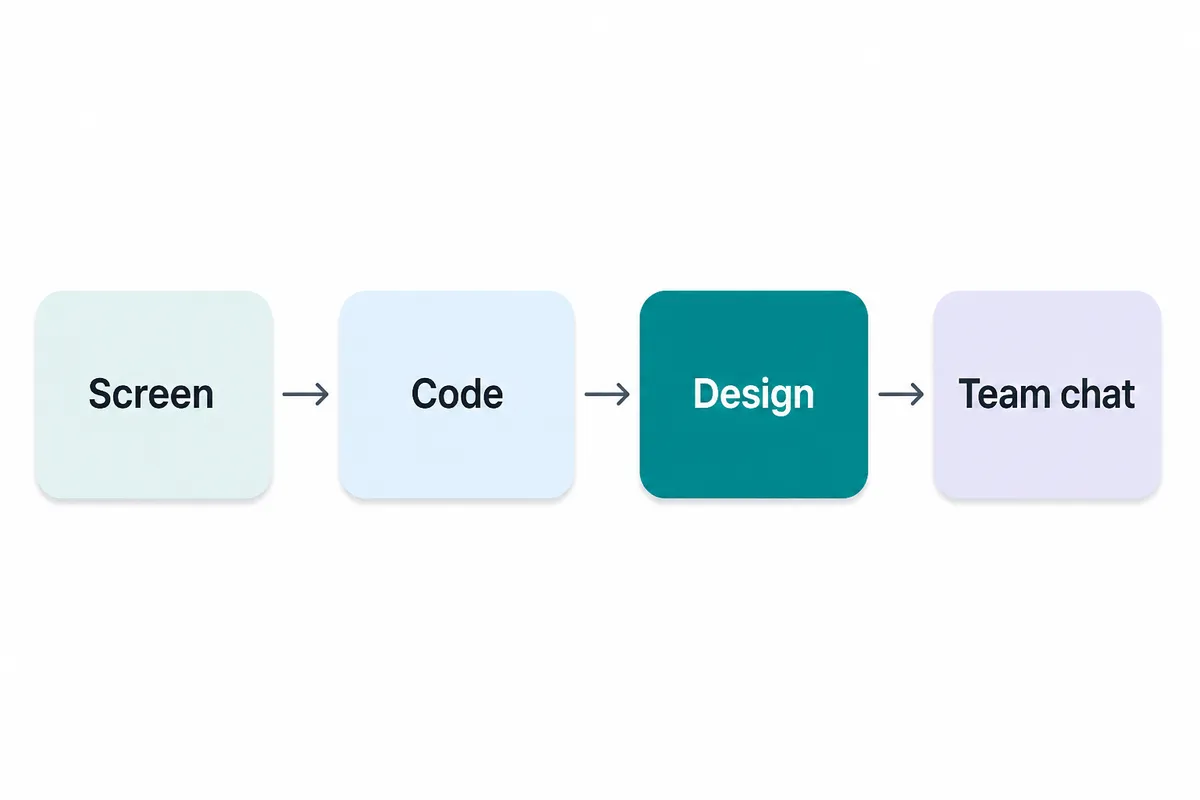
The process at a glance
Reported accounts describe a virtual onsite rather than one fixed company-wide interview script. The table below is best read as a useful preparation model, not a guarantee for every team.
| Stage | Common format | What it screens for | How to prepare |
|---|---|---|---|
| Initial screen | Recruiter or early technical conversation | Role fit, communication, relevant experience | Know the team, product area, and your project story |
| Coding | Live problem solving | Data structures, complexity, clear reasoning | Practise patterns aloud and test edge cases |
| In-domain design | Design discussion tied to the role | Technical judgement and trade-offs | Learn the target domain’s constraints |
| Distributed systems design | Architecture discussion for relevant teams | Scale, reliability, interfaces, failure handling | Explain choices rather than reciting components |
| Experience retro | Deep dive on previous work | Ownership, learning, engineering maturity | Prepare decisions, setbacks, and outcomes |
| Cross-functional discussion | Collaboration-focused conversation | Communication and stakeholder judgement | Show how you work beyond your own code |
One documented team reportedly used the labels In-domain Design, Distributed Systems Design, Experience Retro, and Cross-functional. That is valuable evidence of the kinds of conversations candidates may face, but it is not a universal Nvidia template. Confirm the expected stages with your recruiter.
Coding rounds — clear problem solving under discussion
For general software engineering roles, coding is a core part of the preparation burden. Candidate reports commonly point to algorithms, data structures, Linux knowledge, and fluency in C++ or Python. The coding conversation is unlikely to reward a silent sprint towards code. It is designed to reveal how you turn an unclear prompt into a correct, maintainable solution.
Expect to clarify constraints, identify an initial approach, improve it where needed, and discuss time and space complexity. The interviewer can assess far more than the final implementation: whether you choose appropriate data structures, spot boundary conditions, test your own work, and respond productively when the prompt changes.
Use Nvidia's interview kit to practise the mapped coding material in a company-focused sequence. For broader coverage, the DSA Patterns Sheet is free to browse and groups problems by reusable reasoning patterns rather than by an unstructured list.
A good coding-round rhythm is:
- Restate the problem and ask about inputs, constraints, and failure cases.
- Explain a straightforward solution before reaching for a more efficient one.
- State why the chosen data structure fits the access pattern.
- Say the complexity aloud before coding.
- Walk through representative and awkward test cases after coding.
For more help with this communication layer, read what interviewers actually look for in live coding interviews and how to explain your thought process clearly in coding interviews.
💡 Pro tip: Treat every practice problem as a spoken exercise. A correct answer that you cannot explain is less useful than a slightly slower answer whose trade-offs you can defend.
In-domain design — understanding the team’s real constraints
The in-domain design discussion is where Nvidia’s team dependence becomes especially important. A design question may be close to the team’s working area: developer tooling, graphics software, infrastructure, data pipelines, embedded systems, or performance-sensitive services.
This round screens for whether you can reason from requirements instead of applying a memorised diagram. A strong answer begins by identifying users, inputs, outputs, scale assumptions, latency sensitivity, data ownership, and operational risks. From there, you can choose interfaces, storage, communication paths, and failure-handling approaches that follow from those constraints.
The interviewer is not necessarily looking for the largest possible architecture. They are looking for proportion. A local tool should not receive a globally distributed design; a performance-sensitive system should not hide its critical path behind vague abstractions; and an uncertain requirement should trigger a clarifying question.
The System Design Sheet is free to browse and is useful for practising the core language of APIs, storage, caching, queues, observability, and trade-offs. If your target role is early-career, focus on making your assumptions explicit and drawing sensible boundaries. For experienced roles, expect the discussion to move further into reliability, capacity, evolution, and operational judgement.
A useful design answer usually follows this sequence:
- Define the core user flow and success criteria.
- Ask what scale and latency actually matter.
- Sketch the smallest viable architecture.
- Identify the data model and main API boundaries.
- Discuss likely failures and how the design evolves.
- Name the trade-off you made and why it is appropriate.
Distributed systems design — reasoning beyond the happy path
Reported accounts also describe a Distributed Systems Design conversation in at least one Nvidia team loop. This is distinct from an object-level design discussion. It examines how services behave when traffic rises, machines fail, data becomes delayed, and assumptions stop holding.
The strongest candidates do not list fashionable infrastructure components. They establish what the system must guarantee, then explain where those guarantees are difficult. For example: does the system need low latency or high throughput? Can data be eventually consistent? What happens during partial failure? How do clients retry safely? Where do you observe degradation?
This is a round where systems fundamentals matter. Refresh operating systems, networking, storage, and concurrency concepts alongside architecture practice. The Operating Systems Sheet and Computer Networks Sheet are free to browse, and they are particularly useful if the role description mentions infrastructure, performance, platform work, drivers, or distributed services.
For candidates moving from coding-heavy preparation into design, low-level design vs high-level design: what interviews actually expect explains the distinction. The important habit is not memorising a diagram. It is connecting a technical decision to a requirement, then acknowledging the cost of that decision.
Experience Retro — can you explain what you actually owned?
An Experience Retro round is a deeper version of a résumé conversation. The interviewer may choose a project and work backwards through your decisions: why you chose one approach, what failed, how you measured success, who disagreed, and what you would change now.
This screens for ownership and technical maturity. “We built” is not enough. You need to distinguish what the team did from what you personally investigated, decided, implemented, or improved.
Prepare two projects with different shapes:
- One project where you made a technical decision under constraints.
- One project where something went wrong and you learned from it.
- One project where you collaborated across functions or influenced a decision.
For each, be ready to explain the original problem, your role, the alternatives considered, the evidence you used, the eventual outcome, and the retrospective lesson. Specificity is persuasive. Metrics can help where they are genuine, but honest detail about a trade-off is more valuable than inflated impact claims.
Practise these stories in an AI mock interview, especially if you tend to give concise technical answers without explaining the context around them.
Cross-functional discussion — engineering judgement with other people involved
The reported Cross-functional stage suggests that technical skill is not evaluated in isolation. Candidates may be assessed on how they communicate uncertainty, work with product or partner teams, handle competing priorities, and make decisions when there is no perfect answer.
This is not a request for polished corporate slogans. Interviewers are usually trying to understand your working style. Do you raise risks early? Can you explain technical consequences to a non-specialist? Do you seek the missing context before committing? Can you disagree clearly without becoming defensive?
Prepare examples involving a difficult trade-off, an unclear requirement, a production issue, feedback you received, and a time when you changed your mind. Keep the structure simple: context, your responsibility, action, result, and what you learned.
Nvidia-specific preparation: map your study to the team
The company-specific challenge at Nvidia is not a named ritual or a universal platform. It is the degree to which technical depth can shift with the team.
CUDA knowledge is expected for GPU and driver teams, according to reported accounts. That means candidates for those roles should not rely solely on general coding practice. They should revisit parallel execution concepts, memory behaviour, performance bottlenecks, debugging methodology, and the hardware-facing consequences of their code.
For general software engineering roles, the reported emphasis is broader: algorithms, systems, Linux, and C++ or Python. The role description should determine your preparation split. A backend infrastructure role may justify heavier distributed systems and networking study; a systems-oriented role may make operating systems and C++ depth more important; an application-focused role may put more weight on coding and project discussion.
Before the interview, ask the recruiter:
- Which team is this role for?
- Is the role closer to product engineering, infrastructure, or systems work?
- Should I expect a design conversation?
- Are there domain areas I should review before the onsite?
That is not gaming the process. It is preparing for the actual role rather than an imagined generic Nvidia interview.
Is the Nvidia interview hard?
Yes, mainly because the loop can combine broad software engineering fundamentals with deep team-specific knowledge.
How many rounds are there? Reported accounts describe a virtual onsite of four to five rounds, lasting roughly four to six hours. Earlier screens may be added, and the exact sequence varies by team.
How long does the process take? Candidate accounts do not support one reliable company-wide timeline. Team needs, role seniority, and scheduling can change the pace, so ask your recruiter what the expected process looks like for your opening.
What makes it difficult? The challenge is not simply solving harder coding questions. Candidates need to switch contexts: algorithmic reasoning, systems judgement, design communication, and detailed reflection on previous work. A candidate who is strong in one area but unprepared for the team’s domain can struggle.
The honest preparation strategy is therefore balanced. Build reliable coding mechanics first, then increase time spent on the technical areas the role description makes most likely.
A 30-day Nvidia preparation plan
Days 1–7 — establish coding reliability
Review arrays, strings, hash maps, trees, graphs, recursion, binary search, and dynamic programming. Focus on recognising patterns quickly and explaining complexity clearly. The guide to graph traversal patterns with DFS and BFS is useful if graph problems are a weak point.
Practise in a realistic editor with Code Practice, and write down recurring mistakes: missed edge cases, unclear variable names, or complexity errors.
Days 8–14 — strengthen systems foundations
Review Linux concepts, processes and threads, memory, networking basics, databases, and failure modes. Match the depth to the role. Systems and infrastructure candidates should spend more time here than application-focused candidates.
Use the free-to-browse DBMS Sheet to revisit transactions, indexing, query behaviour, and data modelling. Explain concepts aloud rather than merely rereading notes.
Days 15–21 — practise design conversations
Choose design prompts and practise turning incomplete requirements into a structured discussion. Start with the core flow, then move to interfaces, data, failure handling, and trade-offs.
Return to Nvidia's interview kit for focused coding practice while keeping design preparation active. Avoid splitting preparation into isolated silos: explain how a coding decision might affect memory use, latency, or maintainability.
Days 22–30 — rehearse the full loop
Run mock sessions that combine coding, a systems or design discussion, and a project deep dive. Use a timer, but do not optimise only for speed. Your aim is to sound organised under pressure.
Prepare your questions for the team as well. Good questions about technical priorities, interfaces with other groups, and the role’s first challenges demonstrate genuine interest and help you assess fit.
Frequently asked questions
What types of Nvidia interview questions should I expect?
Reported accounts describe coding, systems, design, project-depth, and cross-functional conversations. The balance depends heavily on the team and role.
How many rounds does Nvidia have?
Reported virtual onsites commonly include four to five rounds over roughly four to six hours. Earlier screens and the precise sequence can vary.
Does Nvidia ask data structures and algorithms questions?
Yes. General software engineering preparation should include algorithmic problem solving, complexity analysis, and communicating a solution clearly.
Is CUDA required for Nvidia interviews?
Reported accounts indicate CUDA depth is expected for GPU and driver teams. It is not presented as a universal requirement for every general software engineering role.
Should I use C++ or Python for Nvidia coding interviews?
Reported accounts mention both C++ and Python for general software engineering roles. Choose the language in which you can write correct, readable code and discuss its behaviour confidently.
How should I prepare for a systems design round?
Practise clarifying requirements, choosing sensible system boundaries, discussing failures, and defending trade-offs. Avoid reciting components without connecting them to a need.
What is an Experience Retro round?
It is a detailed discussion of work you have already done. Expect questions about your decisions, ownership, setbacks, evidence, and what you would change.
Are Nvidia interviews the same across teams?
No. Reported accounts emphasise team variation. Confirm the likely format and domain focus with your recruiter.
How should I prepare for a GPU or driver team?
Add CUDA, systems, memory, performance, and hardware-facing concepts to your standard coding preparation. Use the role description to identify the most relevant topics.
Where to start
Start with the part of the loop that transfers across teams: clear coding reasoning. Then layer in systems and design preparation based on the role you are pursuing.
Open Nvidia's interview kit to practise the 11 mapped DSA questions, use the free sheets to refresh systems fundamentals, and rehearse project and design discussions through an AI mock interview.
Interview structures change by team and hiring need. Confirm the expected format with your recruiter, then prepare for the technical work the role is actually hiring you to do.
Topics
Related on Thita
Your next step
Practise with AI mock interviews
A spoken interview that asks follow-up questions, runs your code and ends with a written report.