
Interview
Ola Machine Coding Round: Preparation Guide (2026)
Prepare for Ola’s machine coding round: reported format, grading priorities, time plan, common mistakes, a two-week schedule, and practical LLD drills.
The Ola machine coding round is where an interviewer can see whether you can turn an incomplete product prompt into clear, running software. Reported accounts place it after the online assessment and before a separate problem-solving and data-structures round, making it a distinct test of practical design rather than another algorithm puzzle.
For focused practice, Ola’s interview kit holds four low-level design problems evidenced at Ola. Use them to rehearse the skill this round exposes: choosing a small, sensible design, implementing the core flow, and explaining the decisions you made.
This guide covers the machine coding stage only. The wider Ola process can vary by team and role, so confirm the current format with your recruiter. What is consistent in reported accounts is the need to prepare for both practical design and a separate DSA-focused stage; the DSA Patterns Sheet is free to browse when you switch back to algorithm preparation.
Where the machine coding round sits
Reported accounts describe an Ola sequence beginning with an online assessment, followed by machine coding, then a problem-solving and data-structures discussion, with hiring-manager and HR conversations later in the process. Exact ordering, interviewer mix and seniority expectations can change, but machine coding is commonly reported as its own round rather than a small section inside live coding.
That distinction matters because the success criteria change.
In a conventional DSA round, you are usually trying to identify an efficient algorithm, prove that it works, and discuss complexity. In a machine coding round, you are expected to create a small application or service-shaped model under time pressure. The interviewer can inspect choices that an algorithm question rarely reveals:
- how you break a vague prompt into entities and actions;
- whether each class has a clear responsibility;
- whether state changes are safe and understandable;
- whether the happy path actually runs;
- how you respond when a requirement changes halfway through;
- whether you can explain trade-offs without defending every choice as perfect.
This is not an invitation to build an industrial system. It is a test of engineering judgement under constraints. The strongest solution is often the smallest one that demonstrates the central workflow cleanly.
Format and time limit: what to expect
Candidate reporting establishes the existence of a machine coding stage, but does not establish one reliable company-wide time limit for Ola. Do not assume a fixed duration from another company’s process. Your interview invitation is the source of truth, and it is worth asking the recruiter whether the exercise is live, collaborative, editor-based, or followed by a design review.
The working format is commonly recognisable even when the clock differs:
- You receive a practical prompt with incomplete requirements.
- You clarify the main actors, actions and rules.
- You design a lightweight object model.
- You implement enough code to demonstrate the central flow.
- You explain the design, run a small driver or test, and discuss extensions.
The prompt may resemble a booking flow, a scheduling tool, a billing model, a locker allocation system, a parking system, or another compact domain with users, state transitions and business rules. Treat these as transferable machine-coding shapes, not as claims about an exact Ola prompt.
A good first question is: “What is the one end-to-end flow you want to see working?” That question prevents a common mistake: spending most of the round building peripheral features before the core action exists.
What graders reward, in rough order
The machine coding round is not judged by line count or by how many design patterns you can name. Although individual interviewers differ, practical coding interviews tend to reward the following qualities in roughly this order.
1. A working core flow
The central user journey must execute. If the prompt is about reserving a resource, show creation, availability checking and reservation. If it is about a workflow, show the workflow moving through its important states.
A modest implementation that runs is stronger than a sophisticated class diagram that never becomes code. Build the happy path first. Then cover one or two meaningful invalid cases.
2. Clear responsibilities
Each class should answer a simple question: what is this responsible for? Domain objects should hold domain state. Services should coordinate actions. Repositories or stores should manage retrieval and persistence-like concerns, even if everything is in memory.
When responsibilities are mixed, change becomes painful. A User class that also assigns bookings, validates payments, prints output and stores global state is a warning sign. Small, focused classes make your reasoning visible.
3. Sensible handling of change
Interviewers often ask for an extension: another booking type, a new pricing rule, a different allocation strategy, or an extra user role. They are not expecting you to predict every future request. They want to see whether your design has left room for the obvious next change.
Use an interface when behaviour truly varies. Use composition when it keeps variation local. Do not add a factory, strategy and observer merely because you remember them from a design-patterns list. For a refresher on when patterns earn their place, read design patterns for interviews.
4. Readable, idiomatic code
Names should communicate intent. Methods should be short enough to scan. State changes should be easy to follow. Avoid cleverness that forces the interviewer to decode your solution.
You do not need to narrate every line, but you should announce important choices: “I am keeping this in memory because persistence is outside the prompt,” or “I am separating this policy because the selection rule may change.”
5. Tests, demonstration and edge cases
A short driver program, a few targeted tests, or a clean demonstration can turn a plausible design into convincing evidence. Show both success and failure behaviour. For example:
- create valid entities;
- perform the core operation;
- show the resulting state;
- attempt one invalid action;
- explain the response.
The Low Level Design Sheet is free to browse and is useful for practising this final demonstration rather than stopping at a diagram.
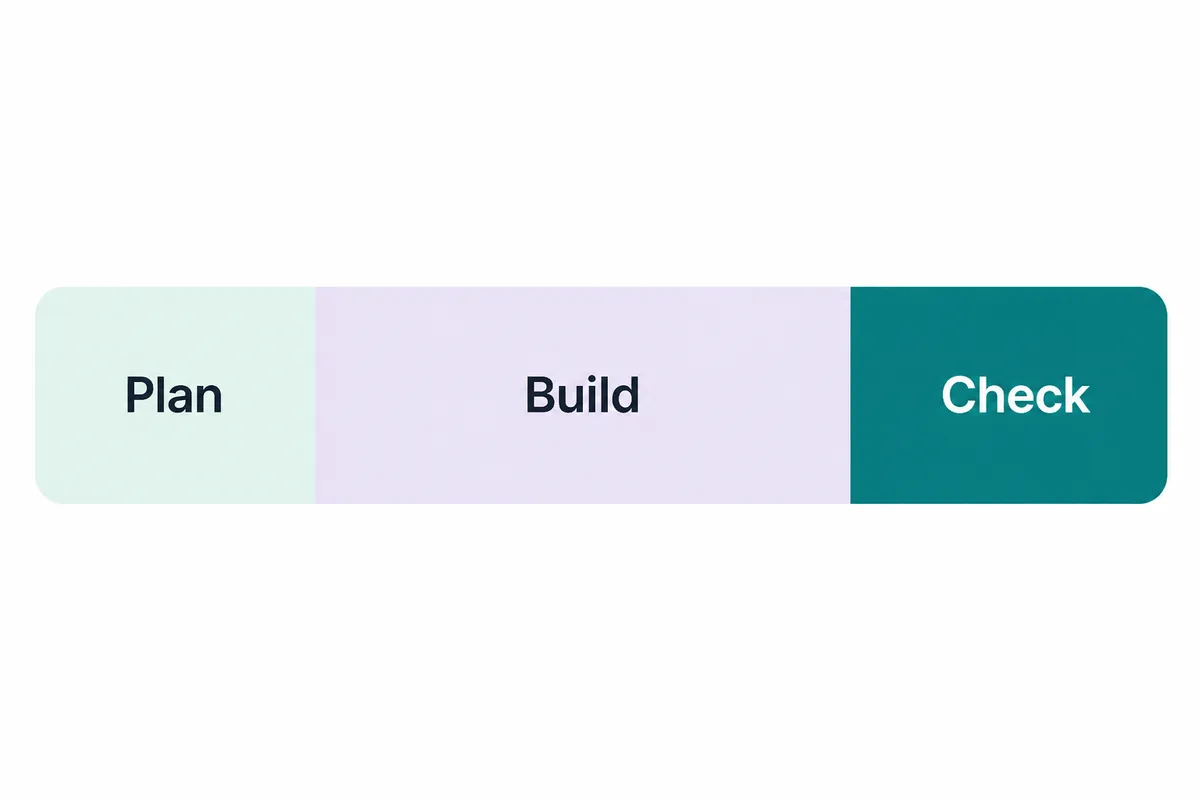
How to structure the available time
Because Ola’s precise time limit is not reliably established in the available reporting, use proportions rather than memorising someone else’s schedule. Adapt the table to the duration on your invitation.
| Phase | Share of available time | What to do | Output |
|---|---|---|---|
| Clarify | 10% | Ask about scope, rules, invalid states and expected demo | A narrow problem boundary |
| Sketch | 15% | List entities, relationships and the core flow | A small class plan |
| Build core | 45% | Implement the happy path before extras | Running central workflow |
| Strengthen | 20% | Add validation, improve names and isolate change points | More reliable code |
| Demonstrate | 10% | Run examples and explain trade-offs | Clear evidence it works |
The most important number in that table is not the percentage. It is the decision to reserve demonstration time. Candidates often use every remaining minute to add code, then cannot compile, explain or run the result. Leave enough room to make the interviewer’s job easy: show them what works.
If you finish early, resist the instinct to add another feature immediately. First ask: “Would you like me to extend this in a particular direction?” That keeps your effort aligned with the evaluator’s priorities.
A practical implementation approach
Start with a spoken plan. It can be brief:
“I’ll first confirm the core flow. Then I’ll model the main entities, keep storage in memory, implement the happy path, and use the remaining time for validation and a small demonstration.”
That opening signals control without overcommitting to a design you have not tested.
Then use this sequence.
Define the nouns. Identify the objects that carry stable state: user, item, booking, slot, vehicle, order or payment. Avoid turning every noun in the prompt into a class. A class should exist because it owns meaningful data or behaviour.
Define the verbs. List the essential operations: create, assign, reserve, cancel, search, update or calculate. Put each operation near the data and rules it affects.
Identify invariants. Ask what must always remain true. A resource cannot be allocated twice at the same time. A cancelled booking cannot be completed. A balance cannot become negative unless the prompt permits it. Invariants guide both your design and your tests.
Implement one vertical slice. Do not create every interface and every empty method before writing behaviour. Take one complete action from input to result. This reveals missing assumptions early.
Explain deliberate omissions. It is fine to say that persistence, authentication, network failures or distributed locking are out of scope. In fact, saying so shows scope control. The problem is not omitting them; it is ignoring them without acknowledging the boundary.
For machine-coding practice that resembles this workflow, return to Ola’s interview kit. Work through each prompt twice: first untimed to understand the design, then under a realistic timer with no editorial open.
Failure modes that cost otherwise good candidates
Designing for every possible future
Over-engineering is a time-management problem disguised as architecture. A maze of abstract base classes, generic factories and future-facing configuration often leaves too little time for the requested flow.
Start concrete. Extract an abstraction only when you can point to behaviour that differs.
Coding before clarifying
An ambiguous requirement is not a trick to be silently solved. It is an invitation to ask a question. Candidates lose time when they assume rules around availability, duplicate actions, cancellation or priorities and later discover that their interpretation differs from the interviewer’s.
Treating compilation as optional
Code that almost works is difficult to evaluate. Compile early, run often, and keep the program in a working state. A tiny executable example is worth more than a large unfinished surface area.
Mixing domain logic with input and output
If business rules are tangled with console printing or driver code, it becomes harder to test and adapt the design. Keep the demonstration layer thin. Your core classes should be usable without the console.
Going quiet after receiving feedback
A machine coding round is collaborative. If the interviewer challenges a choice, do not immediately rewrite everything. Explain your current assumption, ask whether the new constraint matters, then make a targeted change. This shows you can work with engineering feedback.
For the communication side, how to explain your thought process clearly in coding interviews offers a useful structure for speaking while you work.
A two-week Ola machine coding practice plan
This plan concentrates on low-level design while preserving enough DSA practice for the separate problem-solving stage reported in the broader loop.
Week one: build the habit of finishing
Days one and two — model small domains. Pick compact prompts and write entities, operations and invariants before coding. Keep each design intentionally small. The goal is not pattern coverage; it is turning requirements into a coherent model.
Days three and four — implement vertical slices. Build a core flow from scratch. Compile after every meaningful step. Add a minimal driver that proves the flow works. Use in-browser code practice for short sessions that force you to finish rather than merely plan.
Day five — practise changes. Take a completed solution and add one requirement. Examples include a new pricing rule, a cancellation path, a different selection policy or a second resource type. Notice where your original structure made the extension easy or painful.
Days six and seven — review and explain. Rebuild one earlier solution without notes, then explain it aloud as if an interviewer were interrupting. Record yourself if possible. Can you state the core flow, class responsibilities and trade-offs in two minutes?
Week two: rehearse under constraints
Days eight and nine — timed builds. Set a timer based on the duration confirmed in your invitation. If you do not yet know it, use a strict session boundary and practise finishing before it. At the end, run the program even if the design is not polished.
Days ten and eleven — targeted LLD practice. Use the four low-level design problems in Ola’s interview kit. Compare your model with the editorial only after you have committed to an approach. Write down one design decision you would keep and one you would change.
Day twelve — DSA maintenance. Spend the session on arrays, strings, hashing and cache-style reasoning, which reported accounts associate with Ola’s online assessment. The free-to-browse DSA Patterns Sheet helps organise this work by recognition pattern.
Day thirteen — mock round. Simulate the whole machine-coding experience: clarify aloud, sketch briefly, build, test and discuss one extension. An AI mock interview can help you rehearse explaining trade-offs and responding to follow-up questions.
Day fourteen — light review. Do not cram another large design. Review your reusable checklist: clarify, model, build core, compile, demonstrate, discuss trade-offs. Prepare your development environment so you are not solving tooling issues during the round.
Frequently asked questions
Is the Ola machine coding round separate from DSA?
Reported accounts describe machine coding and a later problem-solving and data-structures stage separately. Prepare for both formats: practical object design for one, algorithmic reasoning for the other.
How long is the Ola machine coding round?
The available candidate reporting does not establish a dependable company-wide duration. Confirm the format and time limit with your recruiter, then practise against that constraint.
What should I build first?
Build the central happy path first. A small working solution that demonstrates the required flow is more valuable than an unfinished design with many planned features.
Should I use design patterns?
Use a pattern when it makes a real variation easier to handle. Do not introduce patterns as decoration. Interviewers are more likely to reward clear responsibilities than a long list of named abstractions.
Do I need a database or framework?
Usually, focus on the scope given in the prompt. An in-memory design is often enough for a machine coding exercise unless the interviewer explicitly asks for persistence or framework-specific work.
What language should I choose?
Choose the language in which you can write clean, working code quickly. Fluency, debugging speed and comfort with collections matter more than selecting a supposedly ideal language.
How much testing is enough?
Test the main flow and one or two meaningful invalid cases. You do not need a complete test suite, but you should be able to show that important rules hold.
What if the interviewer changes the requirement?
Pause, restate the new requirement, explain the impact on your current design, and make the smallest appropriate change. The response is often being evaluated as much as the final code.
Is machine coding the same as high-level system design?
No. Machine coding focuses on classes, objects, interactions and executable code. High-level design focuses more on services, data flow, scaling and distributed trade-offs. See low-level design vs high-level design for the distinction.
Start with a working design, not a perfect one
The Ola machine coding round rewards a disciplined engineering loop: clarify the requirement, choose a narrow model, implement the core behaviour, run it, then explain how it could evolve. That is a practised skill, not an innate one.
Start with Ola’s interview kit and its four low-level design problems evidenced at Ola. Pair that work with the free-to-browse Low Level Design Sheet, keep your DSA recognition sharp with the free sheets, and rehearse your explanations through an AI mock interview.
Interview formats change by team and role. Confirm the current details with your recruiter, but arrive ready to build a small system that works.
Topics
Related on Thita
Your next step
Practise with AI mock interviews
A spoken interview that asks follow-up questions, runs your code and ends with a written report.