
Interview
Quora Interview Questions and Process: The Complete Guide (2026)
Prepare for Quora software engineering interviews with a practical guide to coding, design and behavioural rounds, plus a focused 30-day study plan.
Quora interview questions are best prepared for as a modern software engineering loop: expect a screening conversation, coding evaluation, technical discussion that may include design, and behavioural or project-depth assessment. Reported company-specific accounts are thin and can vary by team, so confirm the current format with your recruiter. The practical preparation priority is transferable: recognise common coding patterns, explain trade-offs clearly, and practise delivering working solutions aloud. Quora's interview kit holds four mapped DSA questions to help focus that practice.
This guide explains the likely stages, what each stage is designed to reveal, how to prepare without relying on unsupported assumptions, and how to use a 30-day plan to arrive ready.
The process at a glance
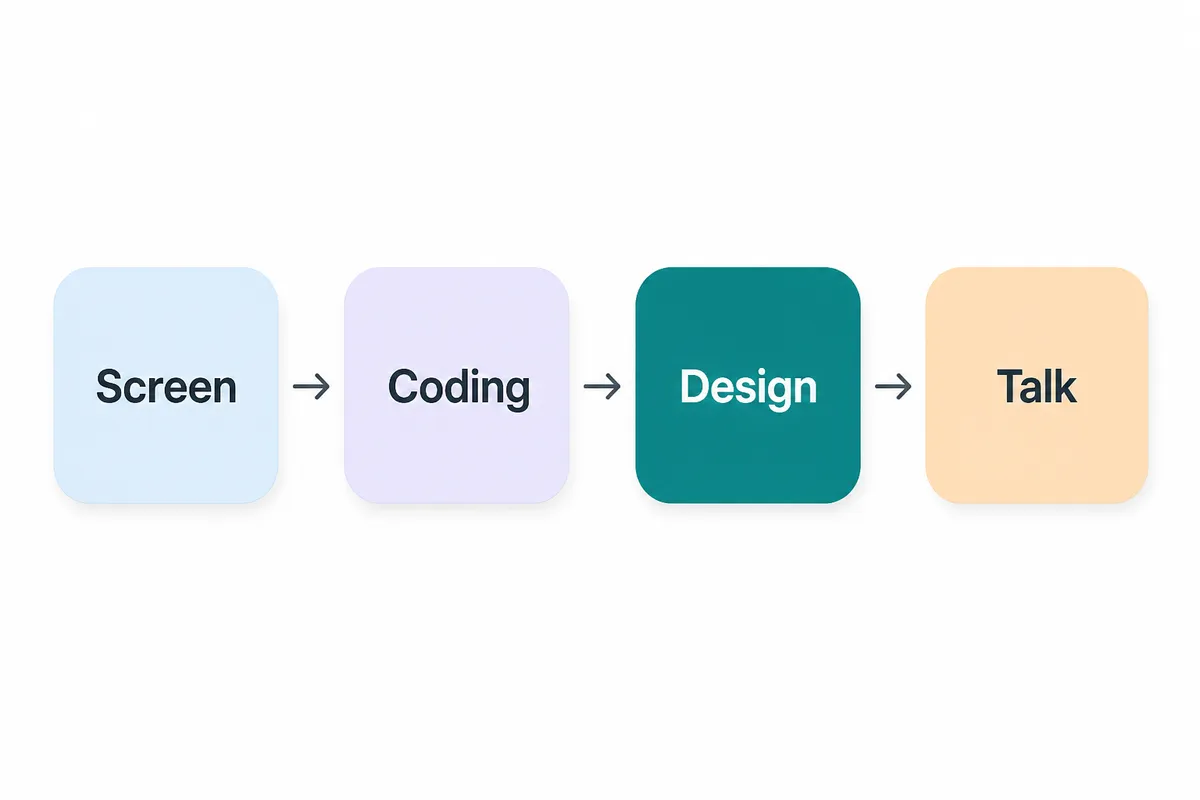
There is no reliable, current company-specific source establishing a fixed Quora interview sequence, round count, platform, or timing. Candidate experiences can differ by role, level, location and hiring team. Treat the table below as a preparation map for the common shape of a software engineering process, not as a guaranteed Quora script.
| Stage | Common format | What it screens for | Best preparation |
|---|---|---|---|
| Initial screen | Conversation with a recruiter or hiring contact | Role fit, experience, communication | Know your work history and motivations |
| Coding screen | Live coding or an online exercise | Problem solving, code quality, complexity | Practise patterns and narrate decisions |
| Technical discussion | Coding, design, or project deep-dive | Engineering judgement and technical depth | Rehearse trade-offs from real projects |
| Final conversations | Technical and behavioural discussions | Collaboration, ownership and level fit | Prepare clear evidence-based stories |
The useful mindset is not to memorise a supposed sequence. It is to build competence that survives format changes. A live coding session, take-home exercise, pair-programming task and technical conversation can all test the same foundations: problem framing, implementation discipline, complexity reasoning, testing and communication.
Stage one — the initial screen
The opening conversation commonly checks whether the role and your background line up before the process moves into technical evaluation. It may cover your recent work, preferred technologies, availability, interests and why you are considering the role.
This is not usually the place for a polished speech about every project you have touched. It is a chance to give a coherent account of your engineering direction. Prepare a concise explanation of:
- the systems or features you have owned;
- the technical decisions you influenced;
- the kind of problems you want to solve next; and
- why the role is a credible next step for you.
For a product associated with knowledge sharing and online communities, it is particularly useful to show that you can think about users as well as implementation. Do not invent enthusiasm for a product you have not used. Instead, identify a genuine product or engineering observation: perhaps a question-discovery flow, content quality challenge, moderation concern, ranking trade-off, or feature whose user impact interests you.
💡 Pro Tip: Keep your introduction structured: present role, strongest project, most relevant skill, and reason for exploring the opportunity. A clear answer is more persuasive than a long chronology.
Stage two — coding questions and live problem solving
Coding is the most transferable part of preparation because even when formats vary, interviewers need evidence that you can turn an ambiguous prompt into correct, maintainable code.
A strong performance usually follows a repeatable sequence:
- Restate the task in your own words.
- Ask about inputs, constraints and edge cases.
- Offer a simple baseline approach.
- Improve it where the constraints justify improvement.
- State time and space complexity.
- Write code in deliberate sections.
- Test with ordinary and awkward examples.
The coding question itself matters, but the visible reasoning matters too. An interviewer cannot award credit for a clever insight that remains entirely internal. Explain why a hash map is appropriate, why sorting changes the cost, or why a traversal visits each node once. If you change direction, say why.
Quora's interview kit is a useful starting point for company-mapped coding practice. Use it alongside the free DSA Patterns Sheet, which organises problems by recurring solution shape rather than leaving you with an unstructured list.
Pattern recognition is the skill behind speed. A problem mentioning pairs, complements or frequency often points towards hashing. A contiguous range often suggests a sliding window or prefix-sum approach. A sorted answer space can indicate binary search. Trees and graphs demand that you identify the traversal, visited-state handling and stopping condition before coding.
For a deeper method, read how to identify the right DSA pattern in a coding interview. If graphs are less familiar, the guide to graph traversal patterns with DFS and BFS is a focused refresher.
✅ Do: Say your complexity aloud before you begin implementation.
❌ Don’t: Start coding immediately because you recognise a familiar-looking prompt.
Stage three — technical depth and design discussion
A later technical conversation may extend beyond a standalone coding puzzle. Depending on the role and team, that can mean discussing a past project, reasoning about component boundaries, reviewing an API choice, or sketching how a system should behave as it grows.
Because no company-specific Quora design format is reliably sourced, prepare for the underlying engineering skills rather than a claimed question list. The interviewer may be looking for whether you can:
- turn a broad requirement into smaller technical decisions;
- identify the entities, state and interactions in a design;
- distinguish essential requirements from optional features;
- explain trade-offs rather than presenting every decision as obvious;
- consider failure cases, data consistency, latency and growth; and
- change the design when a new requirement appears.
For junior roles, discussion often begins closer to code: classes, interfaces, ownership of state and testability. More experienced roles may move towards services, data storage, scaling, reliability and observability. The right level is not determined by the diagram’s size. It is determined by whether your choices are proportionate to the stated problem.
The Low Level Design Sheet and System Design Sheet are free to browse. They are useful for practising the vocabulary that lets you move from “I would build a service” to a defensible explanation of responsibilities, data flow and trade-offs.
If you are unsure where low-level design ends and system design begins, start with low-level design vs high-level design: what interviews actually expect.
Stage four — behavioural and project conversations
Technical ability is necessary, but it is rarely the entire decision. A behavioural or hiring conversation can test how you work with others, respond to uncertainty, receive feedback, make trade-offs and take ownership.
Prepare stories from real experience rather than generic strengths. Good stories have a clear structure:
- Situation: What was happening, and why did it matter?
- Task: What responsibility was yours?
- Action: What did you decide and do?
- Result: What changed, and what did you learn?
Choose stories where your individual contribution is visible. “We improved performance” is weak without detail. “I identified a slow query path, proposed an indexing change, measured the effect and documented the rollback plan” gives the interviewer something concrete to assess.
Have examples ready for disagreement, failure, difficult feedback, ambiguous requirements, quality improvements and cross-functional work. Do not force every answer into a triumph. A thoughtful account of a mistake, including what you changed afterwards, often demonstrates stronger judgement than a flawless but vague story.
An AI mock interview can help you rehearse both technical explanations and behavioural answers aloud. The objective is not to sound scripted. It is to make your evidence clear under follow-up questions.
Named rituals and what to verify
No named Quora-specific interview ritual, platform, time limit or fixed round sequence could be reliably sourced for this guide. That absence matters because it would be misleading to present generic industry conventions as Quora policy.
Ask your recruiter practical questions before you commit your preparation time:
- Will the next stage be live coding, an online exercise, or a discussion?
- Is the focus likely to be algorithms, practical coding, system design, or project depth?
- What level is the role calibrated for?
- Is there anything you should prepare or bring for the session?
- Who will you be meeting, and what area do they cover?
These questions do not make you look unprepared. They show that you plan deliberately. They also help you select the right practice mode rather than spending every evening on the wrong kind of problem.
Is the Quora interview hard?
It can be hard because software engineering interviews reward several skills at once: coding fluency, structured reasoning, communication, design judgement and evidence of collaboration. The difficulty is less about guessing an obscure question than reliably demonstrating those skills while being observed.
How many rounds are there? There is no dependable, current consensus on a fixed Quora round count. Reported accounts are thin and vary by team, so ask your recruiter for the process attached to your specific role.
How long does it take? A reliable Quora-specific end-to-end timeline is not available from the sourced research. Scheduling, team needs and level can all change the pace. Confirm likely milestones directly with your recruiting contact.
The uncertainty should not stop preparation. It should change how you prepare: build a broad technical base, rehearse communication, and maintain a flexible plan that can shift towards coding, design or project discussion once you know the next stage.
A 30-day preparation plan
Days one to seven — rebuild coding fluency
Start with arrays, strings, hashing, two pointers, sliding windows, sorting and binary search. Do not chase volume alone. After every problem, write down the cue that should have helped you recognise the pattern sooner.
Use in-browser code practice for short, frequent sessions. Practise writing complete code, not fragments that work only in your head. Finish each session by testing empty inputs, duplicates, boundary values and the largest plausible case.
Days eight to fourteen — practise explanation
Keep solving, but make each session verbal. Explain the brute-force option first, then the improvement. State complexity before coding and narrate test cases afterwards.
Read what interviewers actually look for in live coding interviews, then record yourself solving a problem. Listen for the gaps: unexplained leaps, unclear variable names, missing edge cases or long silent stretches.
Days fifteen to twenty-one — add design and fundamentals
Work through small design prompts first. Define the core objects, their responsibilities and the flow that must work before adding patterns. Then move to a higher-level prompt and practise clarifying requirements, estimating load only when useful, and explaining a simple first version.
Refresh databases, operating systems and networking if your role requires broader fundamentals. The free DBMS Sheet is a practical way to revisit concepts such as indexing, transactions and query behaviour without treating them as trivia.
Days twenty-two to thirty — simulate the interview
Alternate between coding, design and behavioural rehearsal. Use a timer, speak throughout, and finish with a brief self-review: what did you clarify, where did you hesitate, and what would you improve next time?
Return to Quora's interview kit for targeted DSA practice, then run an AI mock interview to test whether your explanation remains clear when questions change direction.
The Quora-specific preparation advantage: prepare for uncertainty well
Most interview guides promise a precise map. For Quora, the more useful and honest advantage is learning how to perform when the map is incomplete.
That is not a lesser form of preparation. In real engineering work, requirements are often incomplete, constraints emerge during discussion, and the best response is not certainty but a disciplined approach: identify what you know, ask what matters, make a reasonable assumption, and explain how you would revise it.
Practise that explicitly. When solving a coding problem, ask which constraints would change your approach. When discussing design, say which requirement you would confirm before choosing storage or service boundaries. When describing a project, distinguish facts from assumptions and individual ownership from team contribution.
Candidates often worry that clarification questions signal weakness. In a well-run technical conversation, the opposite is usually true. Good questions show that you understand implementation depends on context. The key is to ask the questions that affect the solution, not to delay every decision.
Frequently asked questions
What kinds of Quora interview questions should I expect?
Prepare for coding questions, technical discussion that may include design, and behavioural or project-depth conversation. The exact format is not reliably documented and may vary by team.
How many interview rounds does Quora have?
There is no sourced consensus on a fixed number. Ask your recruiter for the current sequence for your role and level.
Does Quora ask DSA questions?
Coding preparation is sensible for a software engineering process. Quora's interview kit contains four mapped DSA questions, and the free patterns sheet supports broader practice.
Should I prepare system design?
Prepare design fundamentals, especially if you are interviewing for an experienced role. Confirm whether the next technical discussion will focus on component design, system design or coding.
What should I say during a live coding round?
Clarify the prompt, explain your approach, state complexity, narrate important implementation choices and test edge cases aloud.
How do I prepare for behavioural questions?
Build several detailed stories about ownership, setbacks, collaboration, disagreement and impact. Focus on what you personally did and learned.
What programming language should I use?
Use the language in which you can write correct, readable code most confidently. Confirm any platform or language expectations with your recruiter.
How long should I prepare?
A focused 30-day plan can create meaningful improvement. If you have less time, prioritise coding patterns, verbal explanation and stories from your own work.
Are interview details the same across all Quora teams?
Do not assume so. The available reported accounts are thin, and team-level variation is possible. Confirm the format for your specific process.
Where to start
Start by building the skills that remain valuable regardless of the final format: structured coding, clear explanation, sound technical judgement and credible project stories.
Open Quora's interview kit to practise the four mapped DSA questions, use the free sheets to strengthen your fundamentals, and rehearse your delivery in an AI mock interview. Before each stage, ask your recruiter what the session will assess so you can adapt your plan with confidence.
Topics
Related on Thita
Your next step
Practise with AI mock interviews
A spoken interview that asks follow-up questions, runs your code and ends with a written report.