
Interview
Uber Coding Interview Questions: Patterns and Preparation (2026)
Prepare for Uber coding interviews with pattern-led DSA practice, live-round communication, system design priorities, and a focused preparation plan.
Uber coding interview questions reward more than the ability to recall a familiar algorithm. The technical loop is commonly reported as a coding screen followed by onsite rounds spanning data structures and algorithms, system design and behavioural discussion. For mid-level and senior candidates especially, system design is a meaningful differentiator: reported accounts describe discussions grounded in the realities of dispatch, location and high-volume marketplace systems.
For the coding portion, Uber's interview kit holds 72 mapped DSA questions, alongside 10 low-level design problems and 4 system design problems evidenced at Uber. That breadth makes pattern-led preparation more useful than memorising isolated prompts. Your aim is to recognise the shape of a problem quickly, explain a sensible route through it, and adapt when the interviewer changes a constraint.
This guide covers the pattern families worth rehearsing, the shape of Uber's reported rounds, how to build recognition speed, and how to practise without turning preparation into an unstructured grind.
Uber’s technical interview shape
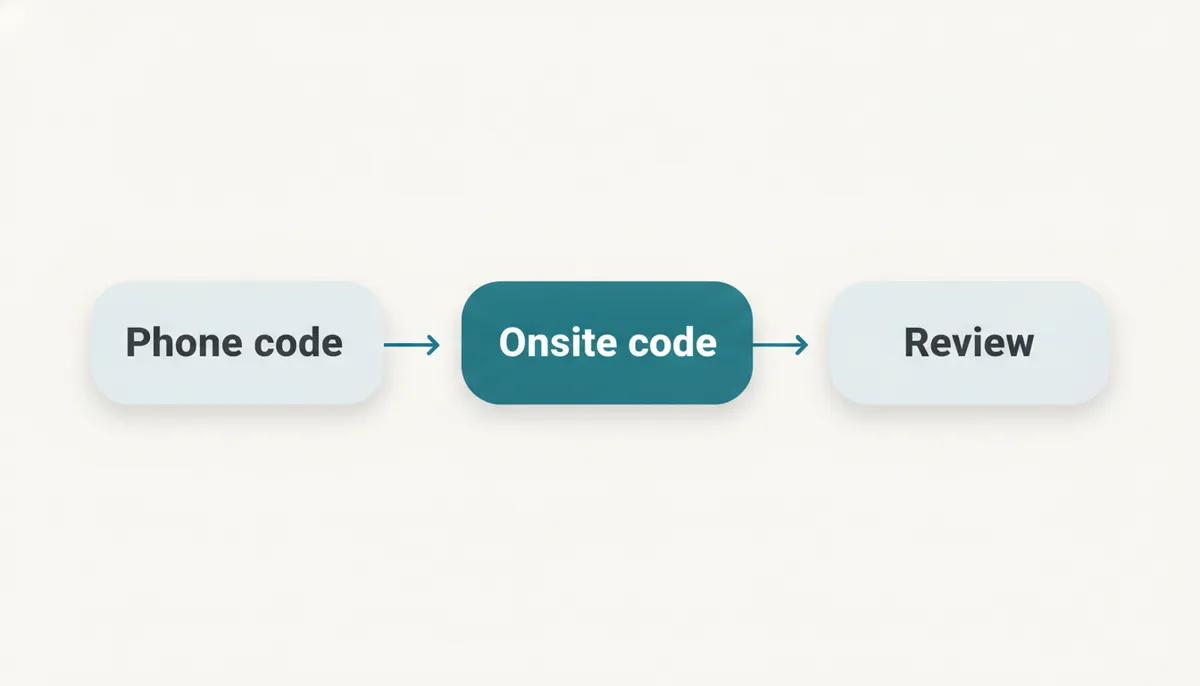
Reported accounts describe a recruiter conversation, a coding phone screen, then an onsite loop of technical and behavioural rounds, followed by a Hiring Committee debrief. The onsite commonly includes DSA, system design and behavioural evaluation. Exact sequencing varies by team, level and location, so treat this as a useful working model rather than a fixed script.
The coding round tests whether you can turn an ambiguous problem into correct, efficient code while communicating your reasoning. The design round tests whether you can make structured engineering decisions under scale, reliability and latency constraints. Uber’s product surface makes those discussions unusually concrete: a system may need to reason about moving people, changing supply, real-time updates and uneven demand.
For candidates early in their career, coding preparation may take the largest share of practice time. As scope and seniority increase, design becomes harder to treat as an add-on. A polished graph solution does not demonstrate capacity, data-flow or degraded-service reasoning; an elegant architecture discussion does not compensate for weak coding fundamentals.
The DSA pattern families to prioritise
A company-tagged catalogue is most useful when you use it to build pattern recognition, not when you try to complete every item in a fixed order. Uber’s mapped DSA material gives you enough variety to practise recurring reasoning moves under different problem stories.
Graph traversal and state exploration
Graph thinking is a natural priority for a platform built around routes, networks and changing relationships. In interviews, the story may be locations, dependencies, users, services or connections. The underlying decision is often the same: what is a node, what is an edge, what state must be tracked, and when can exploration stop?
Practise distinguishing breadth-first search from depth-first search before you start coding. Breadth-first search often fits a nearest, fewest or earliest result. Depth-first search is frequently better for exploration, component discovery or backtracking through possibilities. The key is not merely knowing both traversals; it is explaining why one matches the objective.
Read graph traversal patterns with DFS and BFS before drilling examples. Then practise stating the graph representation, visited-state rules and time complexity aloud. That final step matters in a live interview.
Binary search and monotonic decisions
Binary search is not only about finding a value in a sorted array. In coding rounds, its more valuable form is recognising a monotonic answer space: a threshold that is feasible above or below a boundary, a minimum capacity, a maximum acceptable delay, or an earliest point at which a condition becomes true.
Candidates often miss this family because the input does not visibly look sorted. Ask: “Can I test a proposed answer efficiently, and does that test change in one direction?” If yes, binary search may turn a costly scan of possibilities into a controlled sequence of feasibility checks.
During practice, spend as much time defining the invariant as writing the loop. Most binary-search bugs are boundary bugs, not syntax bugs.
Hashing, windows and frequency state
Many interview problems become manageable once you identify the smallest state that needs to be remembered. Hash maps and sets are central here: tracking seen values, counts, last positions, active items or membership. Sliding-window techniques add a second skill: expanding and shrinking a range while maintaining an invariant.
The recognition cue is usually a contiguous sequence plus a condition that changes as you move through it. Instead of restarting from every index, maintain a window and update the relevant state as each item enters or leaves. Explain the invariant clearly: perhaps the window has no duplicates, stays within a budget, or contains a required set of values.
These may feel like familiar patterns, but live coding still tests whether you can select the correct one quickly and defend its complexity. A concise explanation of the state you are maintaining is often more reassuring than rushing into implementation.
Intervals, ordering and greedy choices
Scheduling, overlapping activity and resource allocation often point towards sorting, interval reasoning and greedy decisions. The challenge is not simply sorting. It is determining what ordering makes a local decision safe: by start time, end time, cost, priority or another property.
When you encounter this family, name the decision you are making repeatedly. Are you merging overlapping ranges? Choosing the next compatible option? Tracking a running maximum? Maintaining active work in a priority queue? A good solution is normally built around one of these statements.
Do not treat greedy reasoning as instinct. State why the local choice preserves a path to a valid global answer. If you cannot articulate that argument, test your approach against a small counterexample before committing to it.
Dynamic programming and optimisation trade-offs
Dynamic programming is where pattern recall alone can become fragile. Define the state in plain language before creating a table or memoisation map. What does each entry represent? Which earlier states can lead to it? What base case makes the recurrence valid?
Uber candidates do not need to force every optimisation problem into dynamic programming. But they should be comfortable identifying overlapping subproblems and choosing between recursion with memoisation, bottom-up iteration and a space-optimised formulation. The dynamic programming patterns guide can help you turn these choices into repeatable checks.
Difficulty mix: prepare for transitions, not guesses
Reported accounts describe Uber as having a genuine coding screen and live DSA evaluation, but they do not provide a reliable, universal difficulty mix for every role. Trying to predict a fixed set of prompts is lower value than building a stable approach for escalating constraints.
Solve a clean baseline version, identify its time or memory bottleneck, introduce the pattern that resolves it, and test edge cases before the interviewer asks. Then explain what would change if the input or scale changed.
This preparation style protects you when a problem begins simply and then gains a follow-up. In live interviews, follow-ups are often less about catching you out than seeing whether you can preserve correctness while changing the model.
The free-to-browse DSA Patterns Sheet is a good place to organise this work by reasoning family. Use it alongside Uber's interview kit when you want company-mapped practice with enough variety to revisit the same pattern under different surface stories.
What recognition speed actually means
Recognition speed is not blurting out “this is BFS” seconds after reading the prompt. It is reaching a justified model quickly enough to spend the remaining time on implementation, validation and communication.
A strong candidate usually moves through four stages:
Clarify the goal. Ask what matters: a count, a path, a minimum, a maximum, a yes-or-no answer, or an optimal arrangement. Confirm constraints that affect the approach.
Name the structure. Translate the story into arrays, a graph, intervals, a tree, a hash map or a state machine. If the representation is unclear, the algorithm will usually be unclear too.
Choose the invariant. Say what must remain true as the algorithm runs. For a sliding window, it may be a frequency rule. For a graph traversal, it may be that visited nodes are not processed again. For binary search, it is the feasible boundary.
Validate before optimising. Walk through a small example, then discuss complexity. Only after the baseline is solid should you move to a more sophisticated version.
Timed repetition matters because it trains the opening minutes of an interview, where unclear thinking can create unnecessary complexity for the rest of the round.
For a fuller framework, see how to identify the right DSA pattern in a coding interview.
The live coding round: make your reasoning visible
The phone screen is commonly reported as a coding conversation, not a silent assessment. Interviewers can only evaluate reasoning that you make visible.
Start by restating the problem and asking one or two focused questions. Describe a direct solution first if it helps establish correctness, then explain the limitation that motivates an improved approach. Before you type, tell the interviewer your chosen data structures and expected complexity.
While coding, narrate meaningful decisions rather than every line. Good narration sounds like: “I am storing the last seen index so I can move the left boundary without rescanning,” or “I will mark this state visited when it enters the queue so it cannot be added twice.” That level of explanation signals control without becoming distracting.
After coding, test normal and awkward cases: empty inputs, repeated values, disconnected components, one-element structures, boundary values and invalid assumptions. The guide to what interviewers actually look for in live coding interviews explains why this final check is part of the evaluation rather than optional polish.
Use AI mock interviews to practise speaking through a solution under pressure. A mock is especially useful if you tend to solve correctly alone but become quiet or disorganised once someone is watching.
System design: where Uber becomes distinctive
For mid-level and senior candidates, reported accounts describe system design rounds. These are explicitly geared towards infrastructure that resembles Uber’s own operating environment: dispatch, geospatial data, matching, dynamic demand and real-time updates. Expect attention to scale maths, throughput and latency budgets rather than a purely diagram-led discussion.
The goal is not to memorise a single architecture. Build a repeatable discussion structure:
- clarify product scope and core user flows;
- estimate traffic, storage and latency needs;
- define APIs and the critical data model;
- separate synchronous paths from asynchronous processing;
- identify bottlenecks and failure modes;
- explain the trade-offs you chose and what you would measure.
The 4 system design problems evidenced at Uber are useful prompts for rehearsing that structure. The 10 low-level design problems evidenced at Uber add a different layer: modelling responsibilities, interfaces, state transitions and extension points inside a bounded system.
The kind of design problem evidenced at Uber should be approached with appropriate care about attribution: use the company context to guide practice, but focus your effort on transferable design judgement. The free-to-browse System Design Sheet and Low Level Design Sheet can help you build both layers. For the distinction between them, read low-level design versus high-level design.
A focused preparation plan
First phase: establish pattern fluency
Work through core DSA families in short, consistent sessions. Begin untimed, but always explain the approach aloud. Track errors by cause: missed pattern, incorrect invariant, complexity mistake, implementation bug or incomplete testing. This is more useful than tracking completion alone.
Use code practice to turn weak areas into repeat drills. If graphs repeatedly cost you time, practise representation and traversal until they become routine rather than merely familiar.
Second phase: build recognition under a clock
Introduce a timer. Spend the opening minutes clarifying and modelling the problem, then code a complete solution. Review your notes afterwards: did you identify the pattern promptly? Did you state an invariant? Did you test the case most likely to break your code?
Rotate pattern families rather than doing a long run of one type. Real interviews do not announce which category is coming next.
Third phase: rehearse design conversations
For system design, practise making reasonable assumptions without becoming trapped in detail. Estimate first, then design. For low-level design, start with the smallest working set of entities and behaviours, then explain how you would accommodate the most plausible extension.
Return to Uber's interview kit for a blended set of DSA and design practice. The benefit of company-mapped material is not that it predicts an exact prompt; it helps you rehearse technical shapes that align with the interview context.
Final phase: integrate communication and behavioural preparation
Keep coding practice active, but spend time telling the story of your past work. Prepare examples of ownership, disagreement, failure, prioritisation and technical judgement. Reported accounts include a behavioural round, and technical strength is not the whole evaluation.
Use an AI mock interview to rehearse both coding communication and behavioural answers. Be specific about your contribution: what you decided, what trade-off you made, what happened, and what you learned.
Frequently asked questions
Does Uber have an online assessment?
No explicit online assessment is reported in the sourced round-mix accounts. Reported accounts instead describe a recruiter stage followed by a coding phone screen and onsite rounds. Confirm the current process with your recruiter.
What patterns should I study for Uber coding interview questions?
Prioritise graph traversal, hashing and sliding windows, binary search on answer spaces, interval reasoning, greedy choices and dynamic programming. More important than memorising labels is being able to justify why a pattern fits.
How many DSA questions are mapped to Uber?
Uber's interview kit holds 72 mapped DSA questions.
Is system design important in Uber interviews?
Yes, particularly for mid-level and senior candidates. Reported accounts describe system design as a differentiator, with emphasis on dispatch, location, matching, demand and scale constraints.
What should I expect in Uber system design rounds?
Prepare to clarify requirements, estimate scale, define a high-level architecture, discuss storage and data flow, address latency and failure modes, and explain trade-offs. Avoid presenting a diagram without connecting it to operational decisions.
Does Uber test low-level design?
Uber's interview kit includes 10 low-level design problems evidenced at the company. Low-level design practice helps with class responsibilities, interfaces, state management and extensibility.
How should I communicate during a live coding interview?
Think aloud at decision points. Clarify the task, explain the baseline, name the improved approach, state complexity and test edge cases. Do not code in silence and reveal the solution only at the end.
Are Uber coding interviews only about algorithms?
No. Reported accounts describe a loop containing coding, system design and behavioural evaluation. Strong preparation should reflect all three, especially at more experienced levels.
How do I improve pattern recognition quickly?
Practise mixed problem sets, identify the input structure and objective before coding, and record why you chose each approach. Review missed recognition cues, not just final solutions.
Start with the patterns, then practise the conversation
Uber’s technical loop rewards candidates who can move from problem story to engineering model without losing clarity. For coding, that means recognising the relevant pattern, maintaining the right invariant and communicating the reasoning behind your code. For design, it means turning broad requirements into a system with explicit trade-offs.
Open Uber's interview kit to practise the 72 mapped DSA questions, 10 low-level design problems and 4 system design problems evidenced at Uber. Combine that work with the free-to-browse DSA Patterns Sheet, then use AI mock interviews to rehearse the part that solo practice cannot fully simulate: explaining your judgement while someone challenges your assumptions.
Topics
Related on Thita
Your next step
Practise with AI mock interviews
A spoken interview that asks follow-up questions, runs your code and ends with a written report.