
Interview
Oracle Interview Questions and Process: The Complete Guide (2026)
Prepare for Oracle interview questions with a round-by-round guide to coding, CS fundamentals, system design, behavioural prep, and a 30-day plan.
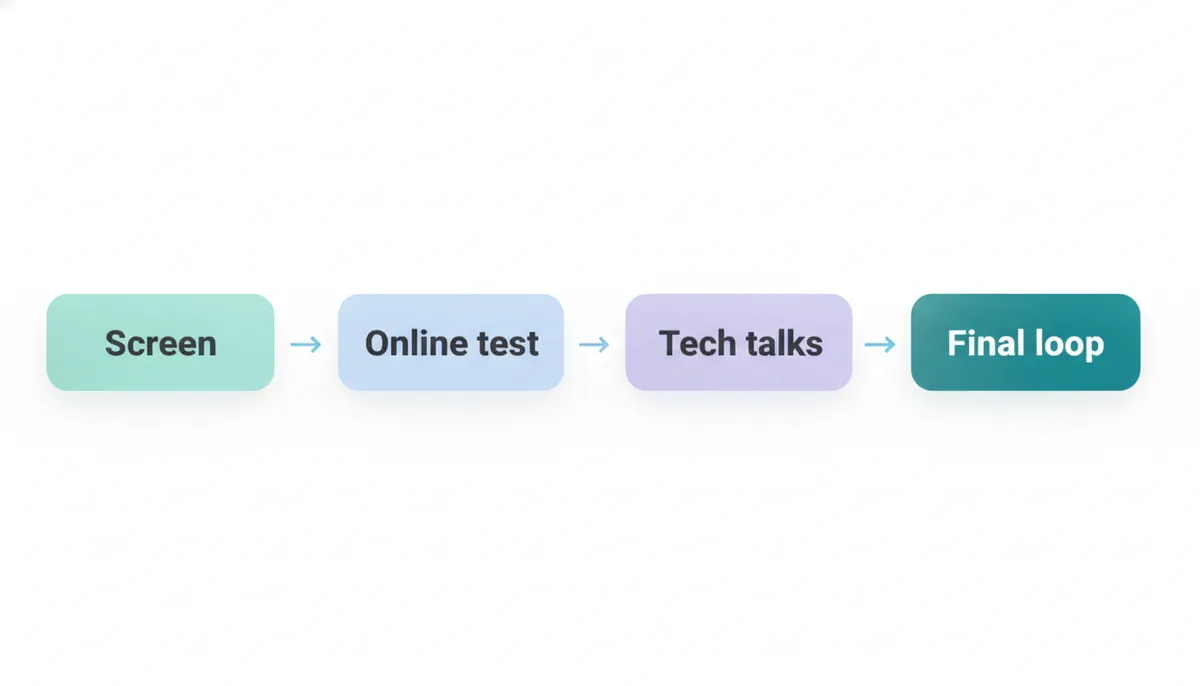
Oracle interview questions commonly span coding, computer-science fundamentals, system design and behavioural judgement. Reported accounts describe a recruiter screen, a HackerRank online assessment, technical phone screens, a virtual onsite, and checks before a written offer. The technical bar is usually strongest in data structures, algorithms, OS, DBMS and networking; cloud and database teams may probe distributed systems, SQL and performance in greater depth. Start with Oracle's interview kit, which holds 82 mapped DSA questions and 1 low-level design problem evidenced at Oracle.
The exact sequence varies by team, location and level, so use this guide as the reported shape of the loop rather than a fixed company policy. Confirm your own format, timing and role expectations with the recruiter.
The Oracle interview process at a glance
| Stage | Format | Common focus | What it screens for |
|---|---|---|---|
| Recruiter screen | Initial conversation | Role fit, background, motivation | Communication and basic fit |
| Online assessment | HackerRank, reported two-tier format | Coding and core problem solving | Timed implementation ability |
| Technical phone screens | One or two discussions | DSA, OS, DBMS, networking | Fundamentals and reasoning |
| Virtual onsite | Reported three to five interviews | Coding, design, behavioural, hiring manager | Depth, collaboration and level fit |
| Pre-offer checks | References before written offer | Career history and judgement | Consistency and professional credibility |
Reported accounts describe the onsite as the point where Oracle joins technical ability to practical engineering judgement. A correct coding answer matters, but so does whether you can explain trade-offs, reason from first principles and discuss work you genuinely owned.
Round 1 — recruiter screen
The recruiter screen is usually a short conversation about your background, the role, location, notice period and interest in Oracle. It is also your opportunity to ask what product group is hiring and whether the role is closer to database infrastructure, cloud services, enterprise applications or another area.
This matters because product-team variance is a recurring theme in Oracle reports. A role near the database or cloud stack can place more weight on SQL, performance, distributed systems and networking than a general application-engineering role. Do not prepare from a generic list alone; use the conversation to narrow your preparation.
Have a concise introduction ready: what you build, the systems you have worked on, the kind of problems you enjoy, and why this role fits the next step in your career. Avoid a memorised corporate pitch. A clear account of your work and motivations is more useful than trying to guess what the recruiter wants to hear.
Good questions to ask:
- Which technical areas are most relevant for this team?
- Is the online assessment followed by live coding?
- Is system design expected at this level?
- What should I expect from the hiring-manager conversation?
Round 2 — HackerRank online assessment
Candidate reports commonly describe a HackerRank assessment with a two-tier structure. Treat it as an early coding filter: you need to convert a sound approach into correct, efficient code under a clock.
Expect familiar data-structure and algorithm shapes rather than obscure contest tricks. Arrays, strings, hash maps, sorting, recursion, trees, graphs, binary search and dynamic programming are all worthwhile preparation areas. The useful skill is recognising the underlying pattern quickly, then implementing it without introducing avoidable edge-case errors.
The DSA Patterns Sheet is free to browse and helps organise practice around recurring solution shapes. For a more deliberate way to build that recognition skill, read how to identify the right DSA pattern in a coding interview.
A reliable assessment workflow looks like this:
- Read every problem before committing to the first one.
- Start with the question where you can secure a correct solution quickly.
- State the intended complexity to yourself before coding.
- Test small, empty and boundary inputs before submission.
- Return to improve a partial solution only after protecting easier marks.
💡 Pro Tip: Do not confuse a passing test suite with a robust answer. Check duplicate values, empty input, one-element input, integer limits and worst-case complexity before you submit.
Round 3 — technical phone screens
Reported Oracle technical screens tend to combine coding with computer-science fundamentals. This is one of the features that makes Oracle preparation distinct from an interview loop focused only on LeetCode-style problems.
A coding question may begin conventionally, then lead into a discussion of complexity, memory use, language behaviour or a better approach. You may also be asked to explain concepts from operating systems, databases or networking. The point is not academic recall for its own sake. Interviewers are looking for evidence that you understand the runtime environment around the code you write.
Prepare these areas in practical terms:
- Operating systems: processes versus threads, scheduling, memory, locking, deadlocks and file systems.
- DBMS: indexes, transactions, joins, normalisation, isolation and query performance.
- Networking: TCP and UDP, HTTP, DNS, latency, connection handling and basic security.
- Coding foundations: time and space complexity, recursion, object references and error handling.
The Operating Systems Sheet, DBMS Sheet and Computer Networks Sheet are free to browse. Use them to revise concepts through questions, not just definitions.
In a live screen, narrate your reasoning. Clarify input constraints, offer a straightforward approach, improve it if needed, and say why the final complexity is appropriate. Our guide to what interviewers actually look for in live coding rounds explains why this visible reasoning often separates two otherwise similar solutions.
✅ Do: Ask whether input size, ordering and memory constraints change the expected approach.
❌ Don't: write code silently and assume a correct final answer tells the whole story.
Round 4 — virtual onsite: coding and system design
The reported virtual onsite contains three to five conversations and can include coding, system design, behavioural discussion and a hiring-manager interview. The mix depends on level and team, but the preparation principle is consistent: be ready to move from implementation details to broader engineering decisions.
Coding in the onsite
Onsite coding usually tests the same core material as the earlier assessment, but with more conversation. The interviewer can probe alternatives, ask for a follow-up requirement or test how you respond when your first approach is not ideal.
Practise explaining each solution in this order:
- Restate the problem and constraints.
- Describe a simple baseline.
- Explain the better approach and its trade-off.
- Code in small, testable steps.
- Walk through cases and complexity.
Use Oracle's interview kit to practise the DSA material evidenced at the company, then rehearse in an interview-like setting. The goal is not merely to finish problems; it is to make your decision-making easy to assess.
System design in the onsite
System design is reported to be present, though lighter than at some FAANG peers. For experienced candidates and Oracle teams closer to cloud or database products, expect more depth on scalability, performance, data storage, reliability and distributed components.
A discussion may start with a familiar product shape, such as a URL shortener or chat application, then explore capacity, persistence, caching, failure handling and API boundaries. The kind of design problem evidenced at Oracle is best treated as a way to practise structured trade-off discussion, not a prediction of an exact prompt.
Use the System Design Sheet, which is free to browse, to revisit the building blocks: load balancing, caches, databases, queues, replication and observability. If your role is SDE-1, focus on clear component choices and sensible assumptions. If it is more senior, be ready to quantify scale, identify bottlenecks and defend trade-offs.
The distinction between class-level and architecture-level discussion is worth understanding before you practise. Low-level design versus high-level design breaks down what each format is designed to reveal.
Round 5 — behavioural and hiring-manager discussion
The behavioural conversation is not a formality. Reported Oracle accounts describe more explicit probing of integrity and ethics than many peer loops, and generic answers are reported to perform poorly.
This is Oracle-specific preparation you should not leave until the final evening. Prepare examples where the right decision was inconvenient: raising a risk, correcting a mistake, challenging a poor technical choice, protecting customer data, dealing with an unrealistic deadline or being transparent about uncertainty.
Use a simple structure for each story:
- Set the context without spending most of the answer on background.
- Explain your specific responsibility.
- Describe the decision, including competing pressures.
- State the outcome and what you learned.
The hiring manager may also go deep on your projects. Be prepared to explain architecture, constraints, trade-offs, incidents, performance work and decisions that were genuinely yours. “We built” is rarely enough; expect follow-up questions about what you decided and why.
An AI interview can help you practise behavioural stories aloud and identify answers that sound vague, overly rehearsed or light on personal ownership.
Is the Oracle interview hard?
Yes, but it is difficult in a broad rather than purely algorithmic way.
The coding bar requires solid DSA preparation, especially under time pressure. What raises the difficulty is the need to switch comfortably between code, fundamentals, system thinking and project discussion. Someone who has practised only coding puzzles can be caught out by OS, networking or DBMS follow-ups. Someone who knows theory but cannot implement clearly can struggle in the assessment and coding rounds.
How many rounds are there? Reported accounts describe a recruiter screen, online assessment, one or two technical phone screens, then a virtual onsite of three to five interviews, followed by reference checks before a written offer. The sequence can vary by role and team.
How long does it take? Reported timelines are around 33–41 days, while many candidates report two months or more. Scheduling, team needs, location and reference checks can all extend the process.
The fairest approach is to prepare for the full skill mix rather than attempting to predict one question. Strong fundamentals create resilience when the loop changes shape.
A 30-day Oracle preparation plan
Week 1 — rebuild coding fluency
Focus on arrays, strings, hash maps, two pointers, sliding windows, trees, graphs and binary search. Solve deliberately rather than chasing volume. After each question, identify the cue that should have led you to the pattern sooner.
Use Oracle's interview kit for company-relevant DSA practice, and set a timer for at least part of each session. Finish by explaining one completed solution aloud.
Week 2 — strengthen CS fundamentals
Split the week between operating systems, DBMS and networking. Do not memorise glossary entries. Instead, connect concepts to realistic engineering situations: why indexes change query performance, when a lock creates contention, why TCP behaviour affects a service, or how isolation changes application correctness.
Spend one session revising SQL and data modelling if your target team works close to Oracle’s database products. Spend another discussing latency, caching and failure modes if the role is cloud-oriented.
Week 3 — integrate coding and design
Continue DSA practice, but add low-level and high-level design sessions. Take a simple service and talk through its API, data model, storage, cache and failure handling. Then practise extending it when requirements change.
Read how much system design is enough for SDE-1 versus SDE-2 interviews to calibrate your level. The aim is proportionate depth, not an overbuilt answer.
Week 4 — simulate the loop
Run full rehearsals: one timed coding round, one CS-fundamentals discussion, one design discussion and one behavioural conversation. Review recordings or notes for unclear explanations, rushed assumptions and project stories that lack personal detail.
Keep the final days focused on reliability. Revisit mistakes, revise key concepts and practise starting answers calmly. New material at this stage is usually less valuable than making your existing preparation dependable.
What makes Oracle interviews different?
Oracle’s reported emphasis on CS fundamentals alongside coding is the differentiator. Many candidates expect a standard coding loop and underprepare for the conversations around operating systems, databases, networking and performance.
That emphasis makes sense for a company with major database, enterprise and cloud product lines, but it also means you should avoid assuming every team has the same technical focus. Database and cloud teams are commonly reported to probe SQL, distributed systems and performance more deeply. Ask the recruiter which product area you are interviewing for, then adjust your revision accordingly.
The integrity-and-ethics emphasis in behavioural discussion is another meaningful distinction. Prepare stories that show sound judgement under pressure, not only stories where you delivered quickly or solved a difficult bug. A technically impressive answer can lose force if it suggests you ignored risk, hid uncertainty or prioritised speed over responsible engineering.
Frequently asked questions
What coding topics should I prepare for Oracle interview questions?
Focus on arrays, strings, hash maps, trees, graphs, sorting, binary search, recursion and dynamic programming. Also practise explaining complexity, edge cases and alternatives aloud.
Does Oracle ask OS, DBMS and networking questions?
Reported accounts commonly describe CS-fundamentals questions covering operating systems, databases and networking, especially during technical screens.
Is there an online assessment at Oracle?
Reported accounts describe a HackerRank online assessment with a two-tier format. Confirm the exact format with your recruiter because roles can vary.
Does Oracle ask system design questions?
Yes, candidate reports describe system design in the virtual onsite, though it is reported to be lighter than at some FAANG peers. Cloud and database teams may explore it in more depth.
How many technical rounds does Oracle have?
Reported loops include one or two technical phone screens plus a virtual onsite of three to five interviews. The exact mix depends on level and team.
How long is the Oracle interview process?
Reported timelines are around 33–41 days, although many candidates report two months or more from first contact to outcome.
What does Oracle’s behavioural round focus on?
Reported accounts describe explicit attention to integrity and ethics, alongside ownership, collaboration, conflict handling and project depth.
Should I prepare SQL for an Oracle software engineering interview?
Yes, particularly if you are interviewing with a database, cloud or data-oriented team. Be ready to discuss indexes, transactions, joins, schema choices and query performance.
Is Oracle harder than a typical coding interview?
It can feel harder because it tests a wider range of skills: DSA, CS fundamentals, design and behavioural judgement. Thorough, balanced preparation is more useful than coding practice alone.
Where to start
Start by making your coding fundamentals dependable, then add the OS, DBMS and networking depth that Oracle’s reported loop rewards. Finally, rehearse how you explain technical decisions and integrity-based behavioural stories.
Open Oracle's interview kit for 82 mapped DSA questions and 1 low-level design problem evidenced at Oracle. Pair that practice with the free sheets for fundamentals and an AI interview rehearsal before your live rounds.
Interview processes change by team and role. Treat candidate reports as useful preparation signals, then confirm your own loop directly with the recruiter.
Topics
Related on Thita
Your next step
Practise with AI mock interviews
A spoken interview that asks follow-up questions, runs your code and ends with a written report.