
Interview
Qualtrics Interview Questions and Process: The Complete Guide (2026)
Prepare for Qualtrics interview questions with a practical guide to likely software interview stages, coding preparation, design discussions, and mock practice.
Qualtrics interview questions are best prepared for as a modern software engineering loop: expect an initial screen, coding evaluation, possible design discussion, and a behavioural conversation about your experience and judgement. Reported company-specific accounts are thin and vary by team, so confirm the exact format with your recruiter. Start with the transferable technical skills that appear across these loops: recognising DSA patterns, explaining trade-offs, writing reliable code, and discussing your work clearly. Qualtrics interview kit holds 16 mapped DSA questions to focus that preparation.
The useful goal is not to memorise a speculative list of rounds. It is to build a preparation system that holds up whether your process emphasises live coding, a take-home exercise, design reasoning, or project depth. This guide explains how to do that, round by round.
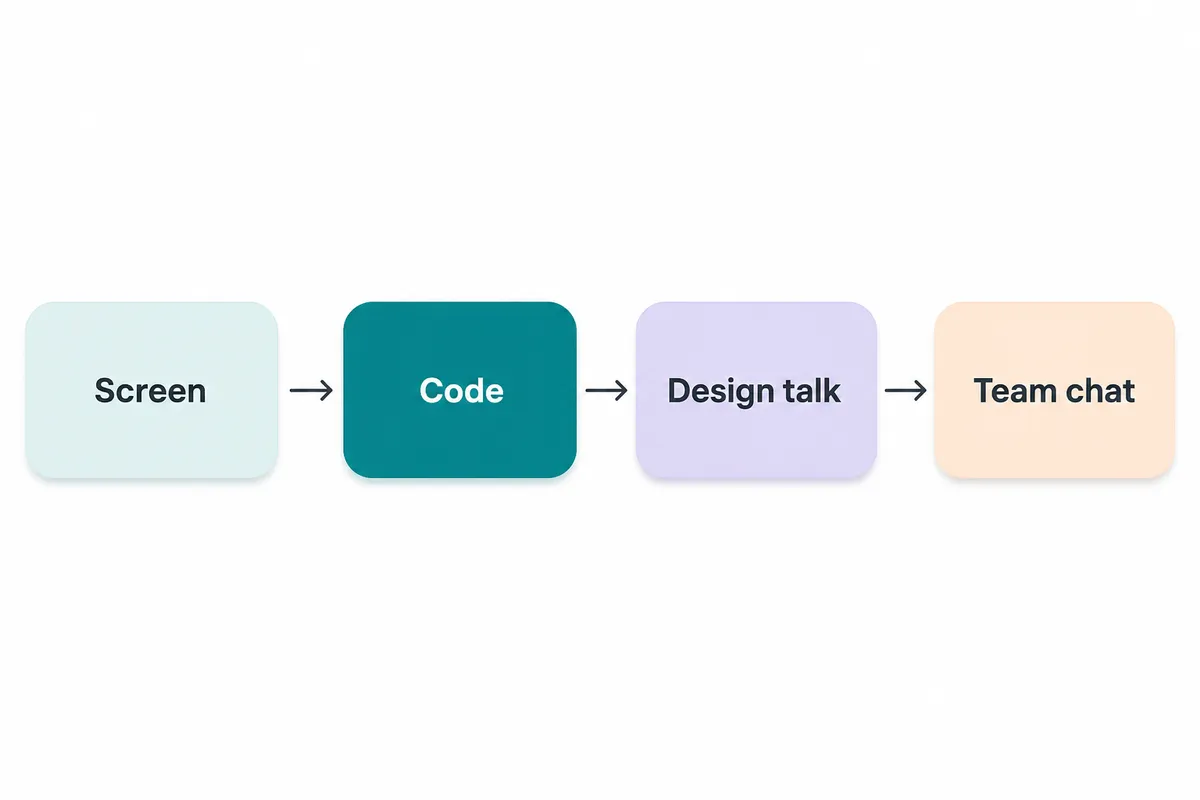
The process at a glance
There is no sufficiently sourced, current company-specific loop to treat as a fixed Qualtrics script. The table below is therefore a preparation map for the common stages candidates may encounter, not a claim that every Qualtrics candidate follows this sequence.
| Likely stage | Common format | What it screens for | Best preparation |
|---|---|---|---|
| Initial screen | Recruiter or hiring conversation | Role fit, experience, communication | Clear project summary and motivation |
| Technical screen | Live coding or timed exercise | Problem solving, code quality, complexity | Pattern recognition and verbal reasoning |
| Design discussion | System or object design conversation | Trade-offs, structure, engineering judgement | Requirements, interfaces, scaling assumptions |
| Team conversation | Hiring manager or panel discussion | Ownership, collaboration, technical depth | Specific examples from past work |
Treat this as a checklist to validate with your recruiter. Ask what format the technical evaluation uses, whether design is expected for your level, whether there is a take-home component, and what the interviewers will want to learn about your previous projects. Those questions are practical, normal, and far more useful than guessing from a generic interview guide.
Round one — the initial screen
An initial screen usually exists to establish mutual fit before either side invests in a deeper technical process. You may speak with a recruiter, a hiring manager, or an engineer. The format varies, but the underlying questions are consistent: what have you worked on, what kind of role are you looking for, and can you describe your experience with enough clarity to inspire confidence?
This is not usually a round to over-engineer. Prepare a concise account of your recent work that covers the problem, your own contribution, the technical choices involved, and the result. Be precise about ownership. “We built” is a useful starting point, but you should be able to explain what you designed, implemented, investigated, or changed.
For a product and experience-management company such as Qualtrics, it is especially worth being ready to connect engineering work to users and outcomes. You do not need a rehearsed corporate speech. You do need to show that you can explain why a technical decision mattered beyond the codebase.
A good answer has a simple shape: context, constraint, action, result, reflection. The reflection is often what separates a credible project story from a résumé walkthrough.
Round two — the technical coding evaluation
The technical coding stage screens for core problem-solving ability: can you understand an unfamiliar problem, choose a reasonable approach, write correct code, and account for complexity and edge cases? It may be live, timed, or embedded in a broader technical conversation. Because current company-specific accounts do not establish one standard format for Qualtrics, practise for both independent coding and collaborative explanation.
The strongest candidates do not begin by typing. They first make the problem visible:
- Restate the input, output, and constraints.
- Test the straightforward approach aloud.
- Identify the bottleneck.
- Name the data structure or pattern that removes it.
- State time and space complexity before implementation.
- Test ordinary, boundary, and awkward cases.
That sequence makes your reasoning easy to follow. It also prevents a common failure mode: finding a correct answer but never checking whether it meets the implied scale of the problem.
Qualtrics interview kit gives you 16 mapped DSA questions for practising this style of reasoning. Work through them by pattern rather than attempting them as isolated puzzles. The DSA Patterns Sheet is free to browse and is useful for reviewing the families of problems that recur in coding interviews.
If pattern selection is where you lose time, read how to identify the right DSA pattern in a coding interview. It explains how to recognise the clues that point towards techniques such as hashing, two pointers, sliding windows, binary search, traversal, and dynamic programming.
💡 Pro tip: In live coding, narrate the decision point, not every keystroke. “A hash map lets me retain the lookup information in constant average time” is useful. Reading code aloud line by line is not.
Round three — the design discussion
A design discussion, where included for the role and level, screens for a different skill from DSA fluency. The interviewer is interested in how you handle ambiguity: whether you ask sensible questions, identify the important constraints, break a problem into components, and make trade-offs without pretending there is one perfect architecture.
At earlier levels, this can be closer to low-level design: classes, responsibilities, interfaces, state, error handling, and how the design adapts to a plausible new requirement. At more experienced levels, the conversation may move towards service boundaries, data flow, reliability, observability, performance, and operational trade-offs.
The best way to prepare is to use a repeatable design sequence:
- Clarify the functional goal and non-functional priorities.
- Establish the smallest useful version before adding scale.
- Identify the core entities, APIs, or services.
- Explain the data path from request to result.
- Surface a likely failure mode and how you would handle it.
- Discuss one trade-off you would revisit as requirements grow.
Do not rush to draw boxes. An interviewer cannot give credit for a technically impressive solution to assumptions they did not share. Asking “Is low latency more important than complete freshness here?” demonstrates better engineering judgement than immediately proposing a queue, cache, and distributed store.
The Low Level Design Sheet and System Design Sheet are free to browse when you need structured practice in both kinds of conversation. For a clearer distinction between them, see low-level design vs high-level design: what interviews actually expect.
Round four — the team and behavioural conversation
A team or behavioural conversation screens for the evidence behind your claims of experience. The interviewer may ask about collaboration, disagreements, delivery under pressure, a difficult technical decision, a production issue, or feedback you received. These are not soft questions with soft standards. They test whether you can work effectively in an engineering organisation.
Prepare several stories, but avoid memorising scripts. You should be able to adapt each example to different prompts:
- A decision you influenced without formal authority.
- A mistake you made and what changed afterwards.
- A project where requirements changed midstream.
- A disagreement you handled constructively.
- A technical problem where you had to balance speed and quality.
- A time you improved a process, not just a feature.
Use “I” accurately when describing your contribution and “we” accurately when describing team outcomes. Candidates often weaken otherwise strong stories by either claiming every success personally or disappearing entirely behind the team.
An AI mock interview can help you rehearse these answers aloud, especially if you tend to over-explain context or omit the decision you personally made. Aim to make each story understandable to an interviewer who knows nothing about your system.
Named rituals and format: what is actually known
No current, usable research establishes a named Qualtrics interview ritual, standard platform, fixed time limit, or uniform round sequence. That absence matters because it changes how you should prepare.
Do not spend your preparation time trying to reverse-engineer a ritual that may not exist for your team. Instead, use your recruiter conversation to turn uncertainty into a concrete plan. Ask:
- Will the coding round be live, timed, or take-home?
- Is there a design discussion, and at what level of detail?
- Will I be expected to use a particular language or tool?
- How much project discussion should I expect?
- Are there team-specific technical areas I should revise?
This is the Qualtrics-specific preparation principle: treat process confirmation as part of interview preparation, not an administrative detail. When publicly available reports are thin, a candidate who asks precise format questions gains an advantage over someone who prepares narrowly for an imagined loop.
Is the Qualtrics interview hard?
It can be challenging, but the difficulty is likely to come less from a known signature ritual and more from having to demonstrate solid engineering ability across several forms of evaluation.
For coding, the challenge is rarely knowing every possible technique. It is recognising the right family of solution quickly, communicating clearly, and producing code that handles edge cases. For design, the challenge is organising an ambiguous problem without over-complicating it. For behavioural discussion, the challenge is supplying detailed evidence rather than polished generalities.
How many rounds are there? There is no reliable, current company-specific count to state. Modern software interview loops commonly include a screen, technical evaluation, deeper interview conversations, and a team or behavioural stage, but the actual shape can vary by role and team.
How long does the process take? Current sourcing does not establish a dependable Qualtrics timeline. Ask your recruiter for the expected stages, scheduling cadence, and decision process.
That uncertainty should not make preparation vague. It should make it broad in the right way: build coding fluency, design structure, and communication skill together.
A 30-day preparation plan
Days 1–7 — build pattern recognition
Spend the first week refreshing the foundations of coding interviews: arrays, strings, hash maps, stacks, queues, trees, graphs, recursion, sorting, and complexity analysis. Do not optimise for volume. Optimise for being able to explain why an approach works.
Use the free DSA Patterns Sheet to organise revision by pattern. For graph practice, graph traversal patterns: DFS and BFS is a focused refresher.
Days 8–14 — practise live reasoning
Move from untimed solving to interview-style sessions. Give yourself a short planning period, state your approach aloud, then code and test. Review not only whether you reached the answer but whether another engineer could follow your path.
Use code practice to practise implementation and feedback loops. Revisit mistakes after a day or two; solving a familiar problem from memory is less valuable than recognising why you missed its structure the first time.
Days 15–21 — add design and fundamentals
Practise describing small systems and class designs from scratch. Start with requirements, name the core components, and explain how data moves. Then add one constraint: a larger user base, failure recovery, a new feature, or a stricter latency target.
If your role is likely to involve backend or platform work, revise the basics that often support design discussion. The Operating Systems Sheet and DBMS Sheet are free to browse for structured revision.
Days 22–30 — simulate the whole conversation
Alternate between coding, design, and behavioural practice. Run full mock sessions where you cannot pause to look things up. Prepare project stories, then test whether you can answer follow-up questions about trade-offs, constraints, incidents, and what you would change.
Return to Qualtrics interview kit and complete the 16 mapped DSA questions with a focus on explanation quality. Finish the plan with an AI mock interview so you can practise transitioning between technical reasoning and project discussion.
What makes Qualtrics preparation different?
The defining feature of Qualtrics preparation is not a known special round. It is the need to prepare intelligently despite incomplete public process information.
That means avoiding two opposite mistakes. The first is assuming every company runs the same LeetCode-only loop. The second is inventing elaborate team-specific expectations without evidence. A stronger approach is to prepare for the durable skills, then use recruiter information to target the final revision.
Focus on three forms of clarity:
Code clarity. Can another engineer read your implementation, understand the state you maintain, and trust that you considered edge cases?
Design clarity. Can you explain the boundaries of a system before diving into technical detail? Can you state what you are trading away?
Experience clarity. Can you explain your work as a sequence of decisions and outcomes, rather than a list of technologies?
These are portable skills, but they are particularly valuable where the public record does not offer a narrow, reliable template to copy.
Frequently asked questions
What types of Qualtrics interview questions should I expect?
Prepare for coding questions involving data structures and algorithms, discussion of your technical experience, and potentially a design conversation depending on the role and level. Confirm the exact format with your recruiter.
Does Qualtrics ask DSA questions?
Prepare for DSA-style coding evaluation. Qualtrics interview kit contains 16 mapped DSA questions for focused practice.
How many interview rounds does Qualtrics have?
There is no reliable company-specific round count in current sourcing. Ask your recruiter for the expected sequence for your role and team.
Is there an online assessment?
Current research does not establish a standard Qualtrics assessment format. Recruiter confirmation is the most reliable source for your process.
Should I prepare system design?
Prepare design fundamentals if you are interviewing for an experienced engineering role or if the recruiter indicates a design stage. Be ready to clarify requirements and discuss trade-offs.
What coding language should I use?
Use the language in which you can write clean, correct code and explain your choices confidently. Confirm any platform or language expectations with your recruiter.
How should I prepare for a live coding interview?
Practise speaking before coding, state complexity clearly, test edge cases, and keep the interviewer involved in your reasoning. See how to explain your thought process clearly in coding interviews.
How long does the Qualtrics interview process take?
A dependable company-specific timeline is not currently established. Your recruiter can provide the most relevant scheduling expectation.
What should I discuss in a behavioural interview?
Prepare detailed examples of ownership, collaboration, technical judgement, setbacks, and impact. Focus on what you personally did, why you chose it, and what happened afterwards.
Where to start
Start with the skills that remain valuable across any Qualtrics interview format: solve coding problems by pattern, explain your reasoning aloud, and prepare credible stories about your engineering work.
Open Qualtrics interview kit to practise the 16 mapped DSA questions associated with Qualtrics. Then use the free sheets to strengthen fundamentals and an AI mock interview to rehearse both technical and behavioural conversations.
Interview formats change by team and role. Confirm the details with your recruiter, then use that information to prioritise the final days of preparation.
Topics
Related on Thita
Your next step
Practise with AI mock interviews
A spoken interview that asks follow-up questions, runs your code and ends with a written report.