
Interview
Wayfair AI Interview, Interview Questions and Process: The Complete Guide (2026)
Does Wayfair use an AI interview? What candidates report: a HackerRank or Codility test, coding, design and behavioural rounds, plus a 30-day prep plan.
Wayfair interview questions are best approached as a blend of coding, design and behavioural preparation rather than as a memorised list of company-specific prompts. Current reported accounts are thin and team-dependent, so confirm the exact format with your recruiter. Meanwhile, build transferable skills: recognise common coding patterns, explain trade-offs clearly, and discuss real engineering work with ownership. Wayfair's interview kit holds six mapped DSA questions to help focus your coding preparation.
This guide gives you a practical framework for the full loop, explains what each commonly reported stage is designed to assess, and lays out a 30-day plan you can adapt once you know your interview schedule.
Wayfair AI interview: what it is and how to prepare
"Wayfair AI interview" is one of the most common searches that lead to this guide, so here is what we could and could not verify as of October 2026.
Is there public evidence that Wayfair uses an AI interviewer? No. We found no Wayfair careers page, recruiter guidance or candidate report that describes an AI system conducting a Wayfair interview. The engineering reports we found describe people running the interviews, with one automated step at the start.
What candidates usually mean by "the AI round". The automated step is an online coding assessment. Candidate reports name HackerRank or Codility as the first technical stage; one write-up reported in July 2026 describes a HackerRank test of two medium-difficulty problems in roughly 75 to 90 minutes, after a recruiter call. Software grades these tests against hidden test cases, and the platforms offer employers automated integrity checks such as plagiarism detection and proctoring. A machine scores the code; people run every later stage.
What candidates report after the assessment. Self-reported accounts describe a recruiter or HR screen, a technical phone screen, then a final loop with hands-on coding, object-oriented or application design and a behavioural conversation (Blind, Interview Query, Glassdoor). These vary by team and level, so treat them as a pattern rather than a rule.
Non-engineering roles. Some searches come from customer service, operations and warehouse candidates. Their Glassdoor reports describe short phone screens and video calls with a hiring manager, not an AI interviewer. If your invitation names a specific video or chat screening tool, the format is whatever that tool runs, and your recruiter can confirm it.
Wayfair AI interview questions: how to prepare
- For the online assessment: practise timed medium-level problems on arrays, strings, hash maps, graphs and intervals in the language you will use. Write your own edge-case tests before you submit; hidden tests punish untested boundaries. Do not paste code from elsewhere, because integrity checks flag copied and AI-generated code.
- For the live rounds: narrate your approach. The interviewer is scoring your reasoning as well as the result.
- For both: rehearse the format, not just the content. An AI mock interview for coding rounds runs your code against real test cases and asks spoken follow-ups, which covers the assessment and the live round in one session. Then work through the six mapped Wayfair DSA questions.
The process at a glance
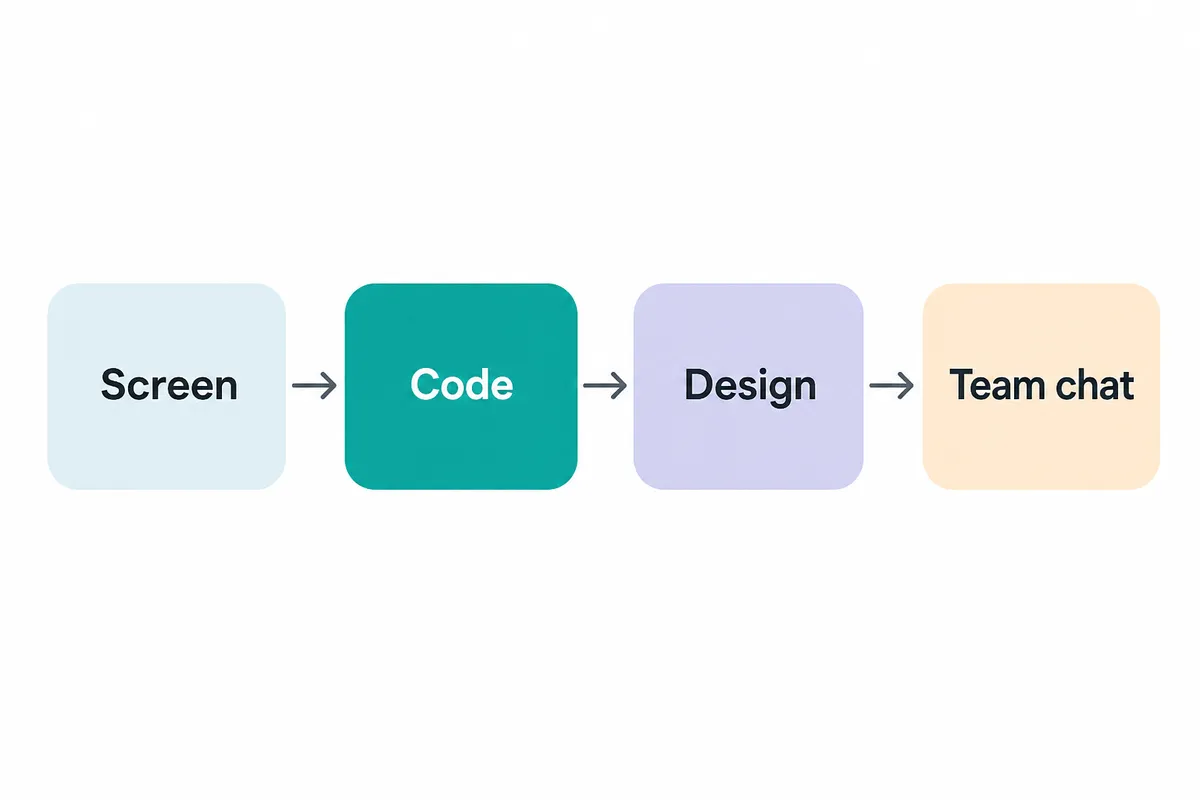
There is no official source establishing a fixed Wayfair interview sequence, round count, platform or timing, and candidate reports (summarised above) vary by team. The table below is therefore a preparation framework that matches the general shape candidates describe, not a promise of Wayfair’s process.
| Stage | Common format | What it may screen for | How to prepare |
|---|---|---|---|
| Initial screen | Recruiter or hiring-team conversation | Role fit, experience, communication | Know your CV, motivations and availability |
| Coding screen | Live coding or online exercise | Problem solving, complexity and code clarity | Practise patterns aloud under a timer |
| Technical loop | Coding and design discussion | Engineering judgement and collaboration | Explain choices, trade-offs and testing |
| Team conversation | Behavioural or project discussion | Ownership, communication and level fit | Prepare specific stories from your work |
Reported accounts for Wayfair are not detailed enough to make stronger claims than this. That uncertainty is useful information, not a reason to prepare vaguely: ask your recruiter which stages apply to your role, whether there is a design component, and what tools the interview uses.
Initial screen — establish role fit before technical depth
An initial conversation commonly checks whether your experience, interests and working preferences align with the opening. It is easy to treat this as administrative and then be surprised by how much signal it carries.
Prepare a concise narrative that connects three things:
- the engineering problems you have worked on;
- the parts of product or platform work you want to do next; and
- why the particular Wayfair role makes sense for that direction.
Avoid reciting your CV from top to bottom. A better answer has a through-line: “I worked on this problem, learnt this engineering lesson, and now want a role where that lesson is useful.” That gives the interviewer something concrete to explore.
You should also be ready to explain practical choices: why you changed teams, what kind of collaboration helps you do your best work, and what you are looking for in your next role. Be direct. A vague answer designed to sound universally appealing usually sounds rehearsed instead.
Coding round — make your reasoning visible
A coding round generally evaluates more than whether you eventually reach a correct answer. Interviewers can observe how you frame an unfamiliar problem, select an approach, test assumptions and respond when the first idea is imperfect.
The transferable foundations are familiar: arrays and strings, hash maps, linked lists, trees, graphs, recursion, sorting, binary search and dynamic programming. But topic coverage alone is not enough. The key skill is recognising the shape of a problem quickly enough to choose a sensible route.
Use this sequence when practising:
- Restate the problem and clarify inputs, outputs and constraints.
- Offer a straightforward approach before reaching for the most efficient one.
- Explain why the improved approach works.
- State time and space complexity before writing code.
- Test normal, boundary and awkward cases aloud.
This structure keeps the interviewer with you. It also makes recovery easier if you spot a mistake, because they can see the reasoning that led to it.
The DSA Patterns Sheet is free to browse and groups practice around reusable approaches rather than disconnected questions. For the most relevant company-tagged starting point, work through Wayfair's interview kit and then broaden your pattern practice where you are least confident.
If pattern selection is the issue, read how to identify the right DSA pattern in a coding interview. If communication is the issue, this guide to explaining your thought process clearly in coding interviews is often more useful than doing another untimed problem.
Practical rule: do not spend the first part of a live round silently searching for the perfect solution. Say what you are considering, state what would change your mind, and let the interviewer assess your judgement.
Design round — turn requirements into trade-offs
For experienced software engineering roles, a design discussion may be part of the loop. The exact scope can vary considerably by team, so ask whether the conversation is likely to focus on class-level design, service-level design, or a technical discussion grounded in your past work.
At the broadest level, design interviews examine whether you can take an incomplete requirement and make it buildable. That involves more than naming technologies. Strong candidates identify what matters first: users, core flows, data, failure cases, constraints and the trade-offs that follow.
A useful design conversation usually moves through these steps:
- clarify the primary user flow and success criteria;
- identify the core data and interfaces;
- choose a small, workable first version;
- discuss scale, reliability and observability only where they change the design;
- explain what you would defer and why.
Do not try to impress by making every system globally distributed from the first minute. Interviewers are generally looking for proportionality: a design should solve the stated problem before it solves imagined ones.
The Low Level Design Sheet and System Design Sheet are free to browse if you need structured practice in either direction. The distinction matters: low-level design versus high-level design explains what each format tends to assess.
For Wayfair specifically, the honest approach is to prepare the kind of design problem evidenced at Wayfair as practice for clean decomposition and trade-off discussion, while confirming the actual design expectations with your recruiter.
Behavioural and team conversation — prove that the work was yours
A behavioural or team discussion commonly tests whether you can collaborate, take responsibility and learn from difficult engineering decisions. It is not a break between technical rounds. It is where an interviewer learns whether your technical claims hold up under detailed follow-up questions.
Prepare stories around these themes:
- a difficult decision you owned;
- a production issue or project setback;
- a disagreement that improved the outcome;
- an instance where you changed your mind after receiving evidence;
- a project where you made a trade-off between speed, quality and scope.
Use a simple situation–action–result structure, but spend most of your time on action. “We rebuilt the service” is not a complete answer. Explain what you personally noticed, proposed, implemented or measured. Then explain what happened and what you would do differently now.
Practise aloud with an AI interview, especially if your examples are technically complex. The aim is not to make them sound polished beyond recognition. It is to make your role, reasoning and impact easy to follow.
Is the Wayfair interview hard?
It can be challenging because candidates need to demonstrate both technical execution and clear communication, but there is not enough current, reliable reporting to rank Wayfair against other companies or claim a fixed difficulty level.
How many rounds are there? A reliable company-specific count is not available. A modern software engineering process commonly includes an initial screen, technical evaluation, and conversations about design or team fit, but the exact Wayfair sequence may vary by team and level. Confirm it with your recruiter.
How long does it take? Current sourced reporting does not establish a dependable Wayfair timeline. Ask early about scheduling, decision stages and whether interviews are grouped together. That lets you plan preparation without relying on stale anecdotes.
The preparation challenge is still predictable. Coding rounds reward pattern recognition and disciplined testing. Design discussions reward structured thinking. Behavioural conversations reward specific ownership. Candidates often prepare only the first of these.
A 30-day preparation plan
Days 1–7: rebuild coding fluency
Start with the patterns that recur across technical interviews: hash maps, two pointers, sliding windows, stacks, queues, trees and graph traversal. Work in short focused sessions and write down the cue that should have helped you recognise each pattern.
Use in-browser code practice to make testing part of your routine. Do not simply read solutions after getting stuck. First state a brute-force route, identify its bottleneck, and attempt one improvement.
Days 8–14: practise communication under pressure
Shift from solitary solving to narrated solving. Set a timer, read a prompt, and say your clarifying questions and approach aloud before typing.
Review your sessions against a simple checklist:
- Did I ask about constraints?
- Did I explain complexity?
- Did I test edge cases?
- Did I recover clearly after an error?
- Did I leave the interviewer able to follow my choices?
The guide to what interviewers actually look for in live coding rounds can help you spot gaps that a correctness-only review misses.
Days 15–21: add design and project depth
Practise converting a loose feature request into a small design. Start with the main flow, model the important entities or services, and add complexity only when it earns its place.
At the same time, prepare your project stories. Pick examples where the details are still accessible: metrics, constraints, alternatives you considered, failures and outcomes. If you cannot explain a decision simply, revisit the material until you can.
Days 22–30: simulate the whole experience
Alternate coding, design and behavioural sessions. Use realistic conditions: limited notes, a timer, and spoken reasoning. Review not just what you got wrong, but where you became unclear or overcomplicated.
In the final stretch, revisit Wayfair's interview kit for the six mapped DSA questions and focus on clean explanations, edge-case testing and complexity analysis. The goal is not to memorise an answer. It is to make your process repeatable.
The Wayfair-specific challenge: preparing well when the public trail is thin
Most company interview guides try to win attention with a named ritual, a fixed loop or a precise timing claim. For Wayfair, the more useful and honest differentiator is the absence of dependable current public detail.
That changes how you should prepare. Do not anchor your plan to an old account describing a particular platform or sequence. Instead, treat recruiter communication as part of interview preparation. Ask focused questions:
- Which interview stages should I expect?
- Is there a coding exercise, and will it be live?
- Should I prepare for low-level or high-level design?
- Is the team seeking particular domain experience?
- What does the team value most in the interview conversation?
These questions are not attempts to obtain answers in advance. They help you allocate preparation time rationally. If the role emphasises platform engineering, spend more time discussing reliability and operational choices. If it is product-facing, rehearse how you turn user needs into technical decisions. If the process includes live coding, prioritise verbal reasoning and clean implementation.
That is also why transferable preparation beats company folklore here. The candidate who can clarify requirements, choose a proportionate solution and communicate trade-offs will be prepared for more formats than the candidate who has memorised a supposedly leaked prompt.
Related
Frequently asked questions
Does Wayfair use an AI interview?
We found no public evidence that Wayfair runs interviews with an AI interviewer. The automated step candidates report is an online coding assessment on a platform such as Codility or HackerRank; recruiters, engineers and hiring managers run the later rounds.
What are Wayfair AI interview questions like?
If "AI interview" refers to the online assessment, candidates describe data structures and algorithms problems of roughly medium difficulty, graded against hidden test cases. Prepare common patterns under a timer and test edge cases before you submit.
What kind of coding questions should I prepare for at Wayfair?
Current reporting does not support a reliable company-specific list. Prepare common interview patterns, complexity reasoning and live explanation. Wayfair's interview kit provides six mapped DSA questions as a focused starting point.
How many interview rounds does Wayfair have?
There is no dependable current public count. Confirm the stage sequence with your recruiter because it may vary by role and team.
Does Wayfair have a system design interview?
A design discussion may appear in a modern software engineering loop, particularly for experienced roles, but current company-specific reporting is too thin to state this as a fixed Wayfair stage. Ask your recruiter.
Is the Wayfair coding interview difficult?
Difficulty depends on your familiarity with common patterns, time pressure and live communication. Practising explanation and testing is as important as practising solutions.
How should I prepare for a live coding interview?
Clarify requirements, state your plan, discuss complexity, write readable code and test boundary cases aloud. Avoid working silently for long stretches.
Should I use a particular programming language?
Use the language in which you can write correct, readable code and explain standard data structures confidently. Fluency matters more than novelty.
What should I expect in a behavioural interview?
Prepare detailed stories about ownership, collaboration, conflict, failure and learning. Focus on your individual actions rather than describing only what the team did.
How can I practise design interviews?
Practise turning ambiguous requirements into a scoped first version, then discuss trade-offs. The free-to-browse design sheets are useful for building a repeatable structure.
What should I ask the recruiter before interviewing?
Ask about the stages, technical format, expected preparation areas, interviewer roles and scheduling. These questions help you prepare efficiently without relying on outdated reports.
Where to start
The strongest preparation for Wayfair interview questions is not guessing an undocumented loop. It is building a process you can carry into coding, design and behavioural conversations: clarify, structure, explain, test and reflect.
Start with Wayfair's interview kit for six mapped DSA questions, use the free-to-browse DSA Patterns Sheet to strengthen weak areas, and rehearse your delivery in an AI mock interview.
Before the process begins, confirm the format with your recruiter. That combination—specific preparation, transferable skills and timely questions—is more reliable than any stale account of a company interview loop.
Topics
Related on Thita
Your next step
Practise with AI mock interviews
A spoken interview that asks follow-up questions, runs your code and ends with a written report.